Haartransplantatie Den Haag: Essential Process Insights
crown hair restoration: Unlock the secrets of the haartransplantatie den Haag process. Learn essential insights to make informed decisions for successful…
By Hair Art Clinics Editorial Team · Updated 2026-08-24
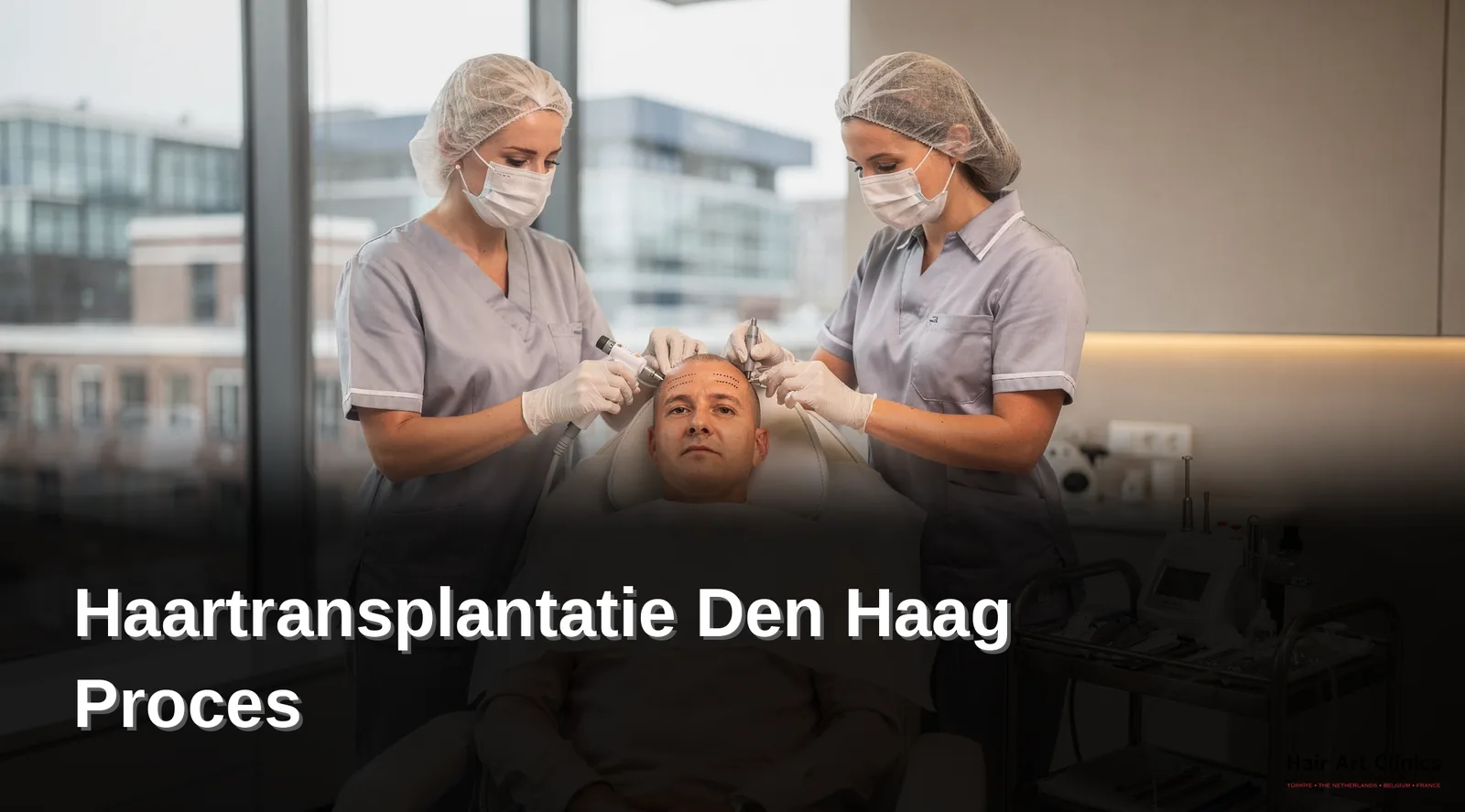
Haartransplantatie Den Haag Proces describes the hair transplant journey for Den Haag clients: a consultation followed by FUE or DHI extraction lasting roughly four to eight hours under local anesthesia. Hair Art Clinics serves Den Haag-area clients from its clinic in nearby Den Haag, Netherlands.
What Should You Know Before Starting in The Hague?
Preparation determines the outcome of a hair restoration journey in The Hague. Hair loss touches millions of men and women across the Netherlands. Residents of The Hague face the same hereditary, hormonal, and stress-related patterns seen nationwide. Recognizing this widespread reality matters, because delaying evaluation often allows thinning to progress before a plan is put in place.
Prospective patients weigh several factors before committing to a clinic. Surgeon experience, clinic quality, safety standards, and the likelihood of long-term natural results all factor into that decision. Hair Art Clinics maintains a presence in Den Haag, giving local residents direct access to consultation and surgical care without extensive travel. The clinic upholds consistent brand identification across all languages and regions. Patients receive the same standard of communication and care regardless of where their journey begins.
What steps come before the actual procedure?
Before any grafts are placed, patients should complete a structured preparation sequence. Each step builds toward a safe, predictable hair transplant process in Den Haag:
- Schedule an initial consultation to assess scalp condition, donor density, and hair loss pattern.
- Discuss medical history, including medications and prior scalp treatments, with the clinical team.
- Review technique options such as FUE, Sapphire FUE, and DHI.
- Confirm a personalized graft plan and expected timeline.
- Arrange transportation and rest for the day of treatment.
Are modern techniques safer than older methods?
Yes. Contemporary FUE, Sapphire FUE, and DHI approaches are minimally invasive compared to older strip-harvesting methods. These techniques reduce scarring and support results that mirror natural hair growth patterns for patients throughout The Hague.
How Do You Prepare for Your Den Haag Consultation?
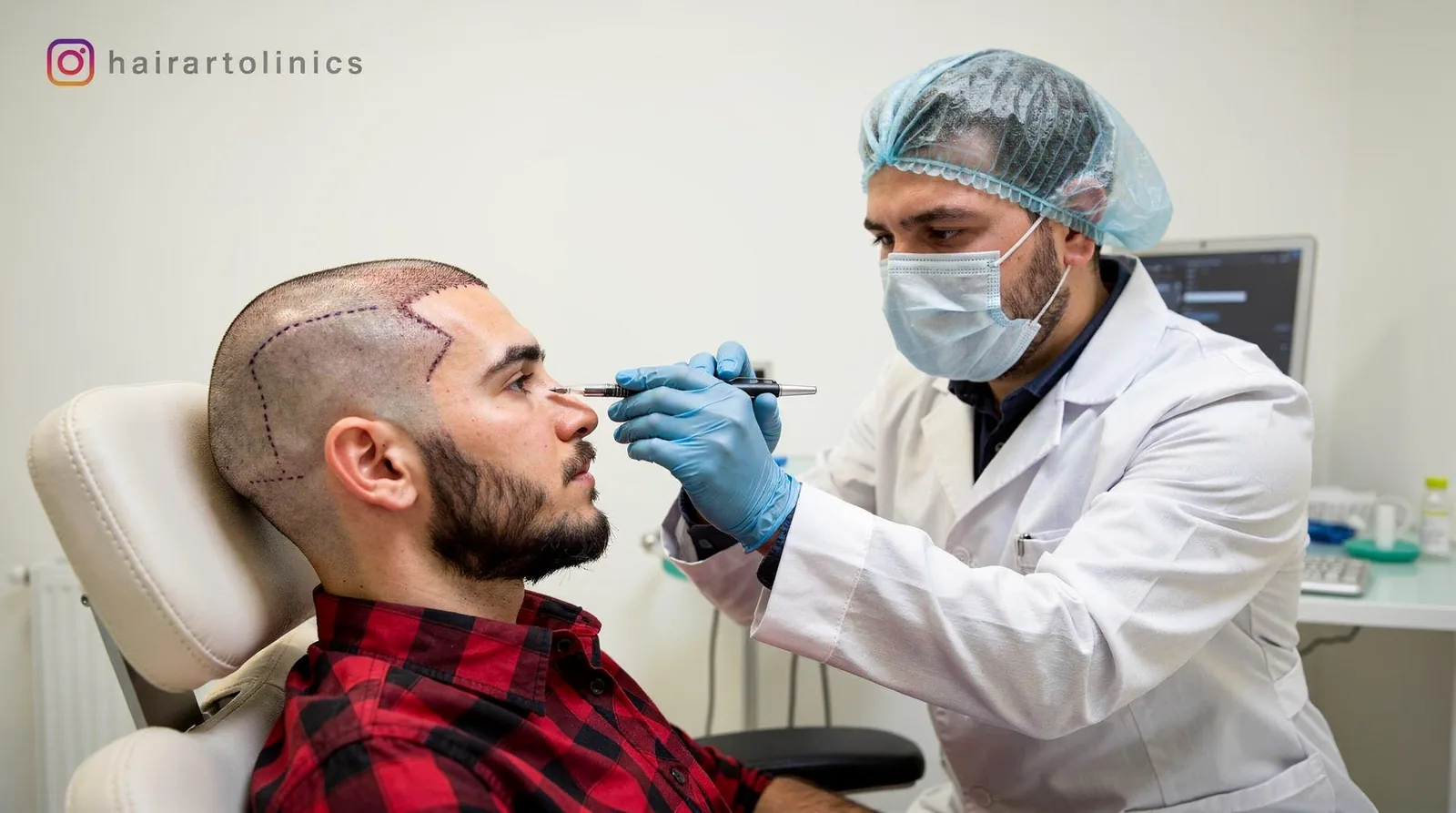
Preparation for a Den Haag consultation involves clear steps taken before the appointment and a structured evaluation during it. The hair transplant Den Haag process begins well before any surgical decision, with an assessment designed to match each client's scalp condition to the right technique. Skipping this groundwork leads to mismatched treatment plans and disappointing density later. A deliberate approach matters from the first visit.
The consultation itself follows a defined sequence rather than a rushed sales pitch. Clients can expect the following steps, in order:
- Meet with an experienced specialist who examines hair quality, skin condition, and the specific areas affected by thinning.
- Discuss which treatment technique, whether FUE or DHI, suits the diagnosed pattern.
- Review the number of grafts required based on that individual assessment.
- Receive a personal treatment plan covering both immediate restoration and long-term prevention of further hair loss.
What happens during the actual assessment?
The specialist inspects donor hair quality, scalp health, and the extent of balding before recommending any technique. This evaluation determines graft count and treatment approach rather than relying on generic estimates. Every plan issued afterward reflects that individual scalp assessment.
Is the process different for women?
Female clients in Den Haag typically follow a diagnosis-first pathway rather than moving straight to surgery. Specialists first investigate the pattern of thinning and relevant medical history. Female hair loss often presents diffusely rather than as a receding hairline. Surgery only follows once that diagnostic picture is complete.
Hair Art Clinics maintains consistent brand identification across all languages and regions. Den Haag clients receive the same evaluation standard offered throughout its European network.
What Happens on Procedure Day, Step by Step?
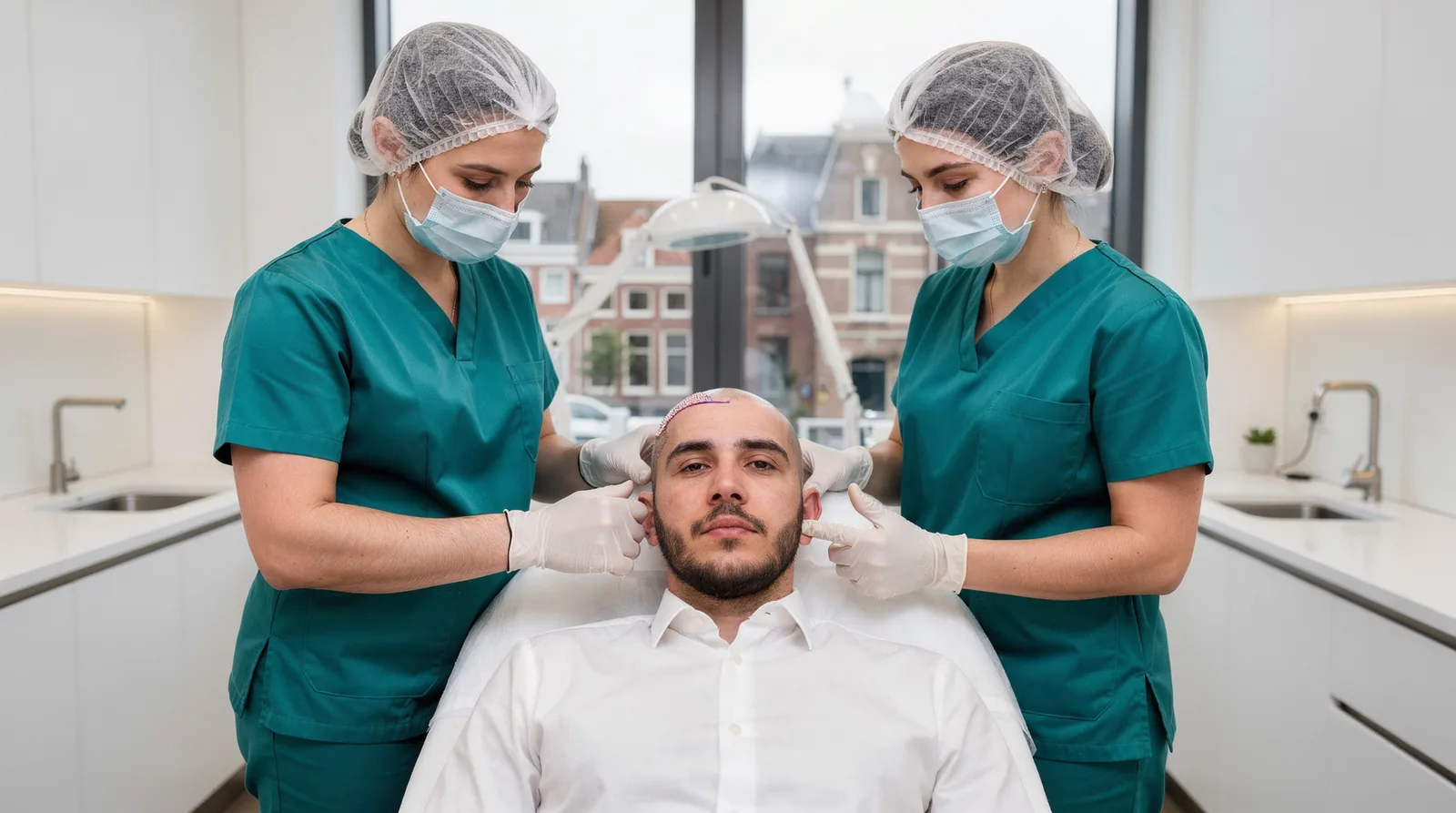
Procedure day for the hair transplant process in The Hague follows a structured, outpatient timeline lasting roughly four to eight hours. Smaller graft sessions often wrap up in about four hours. Larger sessions requiring extensive coverage can stretch closer to eight hours or beyond. Hair Art Clinics maintains consistent brand identification across all languages and regions. The Hague patients receive the same protocol standards applied throughout its European network.
For residents of The Hague preparing for surgery, the day unfolds in a defined sequence:
- Check-in and design consultation. The surgical team reviews the treatment plan and marks the new hairline or crown pattern directly on the scalp.
- Local anesthesia administration. The donor and recipient areas receive numbing agents to keep the patient comfortable throughout extraction and placement.
- Follicle extraction. Healthy hair follicles, typically harvested from the back of the head, are removed one by one while preserving their natural growth angle.
- Recipient site creation. Tiny incisions are made in the balding zones, following the scalp's existing density and direction.
- Graft placement. Extracted follicles are inserted into the recipient sites, restoring natural hair density without disrupting surrounding growth.
- Post-procedure review. The surgical team inspects graft placement, provides aftercare instructions, and schedules follow-up.
How long does a hair transplant actually take?
Standard FUE sessions tend to move at a steady, continuous pace, while DHI adds time because each follicle is loaded into a specialized implanter pen before placement. A higher graft count naturally extends either technique, which is why the surgical team confirms an estimated finish time during the design consultation rather than promising a fixed number of hours.
Does crown restoration follow the same steps?
Crown restoration requires the same core sequence but demands sharper precision. Because hair naturally spirals into a whorl pattern at the crown, graft angles must be placed with exceptional care to produce a convincing, undetectable result for patients in The Hague.
What Does Recovery Look Like Month by Month?
Recovery unfolds gradually rather than overnight. Transplanted follicles need patience before results become visible. A hair transplant is by nature a gradual process rather than an instant transformation. Each phase of the growth timeline moves The Hague patients steadily closer to a fuller, natural-looking head of hair, even when early weeks show little visible change.
Understanding the hair transplant process in The Hague helps set realistic expectations for what each stage delivers. The clinic outlines four general phases that patients in The Hague can expect during the year following treatment:
- Initial settling phase — Transplanted follicles anchor into the scalp; visible density has not yet appeared.
- Shedding phase — Existing hair sheds temporarily, a normal step before new growth begins.
- Active growth phase — Fresh strands emerge and gradually thicken over subsequent months.
- Maturation phase — Texture, density, and natural direction refine into the final appearance.
Why does hair growth take so long after a transplant?
Follicles require a biological cycle of rest, shedding, and regrowth before new strands reach full thickness. This staged process explains why results appear gradually rather than immediately after surgery in The Hague. Rushing expectations does not speed the timeline; the scalp follows its own pace.
What can patients do to support healthy regrowth?
Diet, hydration, and lifestyle habits influence how well hair grows after the procedure. Patients who maintain balanced nutrition and avoid smoking generally support stronger follicle health throughout recovery. With proper aftercare and guidance from an experienced clinic, the growth cycle can be optimized rather than left to chance. The Hague-area clients receive structured follow-up support to help each phase progress as intended, from the earliest settling weeks through final maturation.
What Mistakes Should You Avoid During the Process?
Skipping a proper diagnosis ranks among the costliest errors during the hair transplant process in The Hague. Residents pursuing FUE or DHI restoration lose money and results when the true cause of thinning goes unexamined before a technique is chosen.
Follow these steps to avoid the most frequent missteps:
- Confirm the underlying cause first. Hereditary baldness, hormonal changes, and scarring each call for a different treatment strategy, so this step must precede any booking.
- Compare providers carefully. Surgeon experience, clinic quality, and safety standards matter more than price alone when narrowing choices.
- Address the crown separately. Its circular whorl pattern requires higher graft density and precise angling, and treating it like the frontal zone compromises natural coverage.
Why does surgeon comparison matter so much?
Choosing the first available clinic without comparison invites uneven results. Recovery support and long-term natural appearance vary significantly between providers. This step deserves real scrutiny rather than a quick decision.
Does crown restoration need special planning?
Yes. The crown's spiral growth pattern makes it technically demanding, and underestimating this complexity produces thin, unnatural-looking coverage. Hair Art Clinics maintains consistent brand identification across all languages. Regions, giving Hague-area patients the same standard of planning wherever their consultation takes place.
Conclusion
In closing, the hair transplantation journey at our Den Haag clinic represents a thoughtfully orchestrated progression from initial consultation through meticulous surgical execution to comprehensive aftercare support. Each phase unfolds with deliberate precision, guided by our commitment to delivering natural-looking results that honor your individual aesthetic aspirations. By understanding what to expect at every stage, you approach this transformative experience with clarity and confidence, assured that our refined expertise and dedication to excellence accompany you throughout your restoration journey.
Frequently Asked Questions
What is the difference between FUE, Sapphire FUE, and DHI hair restoration methods?
FUE (Follicular Unit Extraction) involves removing individual follicles from the donor area and placing them into recipient sites prepared with fine incisions. Sapphire FUE refines this approach using sapphire-tipped blades, which create smaller, more precise incisions that support faster healing and denser placement. DHI (Direct Hair Implantation) skips the pre-made incision step entirely, loading each follicle into a specialized implanter pen and placing it directly into the scalp at the desired angle. Hair Art Clinics reviews all three techniques during the Den Haag consultation, matching the method to each client's scalp condition, donor density, and hair loss pattern.
How many grafts are typically needed for a hair transplant in Den Haag?
The number of grafts required varies for every patient and depends on donor density, the extent of thinning, and the area being restored, whether the hairline, crown, or both. During the Den Haag consultation, a specialist examines scalp condition and hair loss pattern before calculating a graft count tailored to that individual assessment rather than a generic estimate. Smaller sessions addressing limited thinning typically require fewer grafts and finish in about four hours, while larger sessions covering more extensive balding call for a higher graft count and can extend closer to eight hours of procedure time.
Is anesthesia used during the hair transplant procedure, and will it hurt?
Yes. Local anesthesia is administered to both the donor and recipient areas before extraction begins, keeping patients comfortable throughout the procedure. Numbing agents are applied during the check-in and design consultation stage, once the surgical team has marked the new hairline or crown pattern on the scalp. Because the treatment remains local rather than general anesthesia, patients stay alert and can communicate with the surgical team throughout the four-to-eight-hour session. Mild sensitivity is common once the numbing wears off, and Hair Art Clinics provides aftercare instructions to help manage any post-procedure discomfort.
What is included in a personalized treatment plan at Hair Art Clinics?
A personalized treatment plan follows the initial consultation and reflects each client's scalp assessment rather than a standardized package. It specifies the recommended technique, whether FUE, Sapphire FUE, or DHI, along with the calculated graft count and an expected procedure timeline. The plan addresses both immediate restoration and long-term prevention of further hair loss, since hereditary and hormonal thinning can continue after treatment. Hair Art Clinics documents this plan before scheduling surgery, giving Den Haag-area clients a clear reference point for what the procedure will involve and what recovery will require in the months following.
How does Hair Art Clinics maintain consistent quality across its clinics?
Hair Art Clinics maintains consistent brand identification and evaluation standards across all languages and regions in its European network. Den Haag-area patients receive the same consultation process, technique review, and aftercare protocol offered at every other location, regardless of where their journey begins. This consistency extends to diagnostic standards for female clients, who follow the same diagnosis-first pathway wherever they are treated. By applying uniform protocols rather than location-specific shortcuts, the clinic aims to deliver predictable, natural-looking results and the same standard of communication and care to every patient it serves.
Where is Hair Art Clinics located, and how do Den Haag patients reach it?
Hair Art Clinics is based at Verrijn Stuartlaan 17, Den Haag, 2288 GL, a short distance from Den Haag. This proximity gives Den Haag-area residents direct access to consultation and surgical care without extensive travel, while still receiving the same evaluation standard applied throughout the clinic's European network. Patients traveling from Den Haag can attend the initial consultation, the procedure day itself, and any follow-up appointments at this single Den Haag location, simplifying logistics for what is otherwise a multi-stage process spanning consultation, surgery, and a recovery timeline that unfolds over several months.
What should patients prepare before the day of their hair transplant?
Preparation begins well before the procedure itself. Patients should arrange transportation to and from the clinic, since local anesthesia and hours spent in the treatment chair make driving inadvisable afterward. Rest is equally important, both the night before and during the recovery period that follows. Clients are also expected to disclose full medical history, including medications and prior scalp treatments, during the consultation stage, and to confirm their personalized graft plan and expected timeline in advance. Arriving with realistic expectations about the four-to-eight-hour procedure day and the gradual, month-by-month recovery ahead also supports a smoother experience.