The FUE Hair Transplant Process in Den Haag
fue hair transplant process den haag: Discover FUE hair transplant procedures at Hair Art Clinics in The Hague. Minimal scarring, natural results,…
By Hair Art Clinics Editorial Team · Updated 2026-08-24
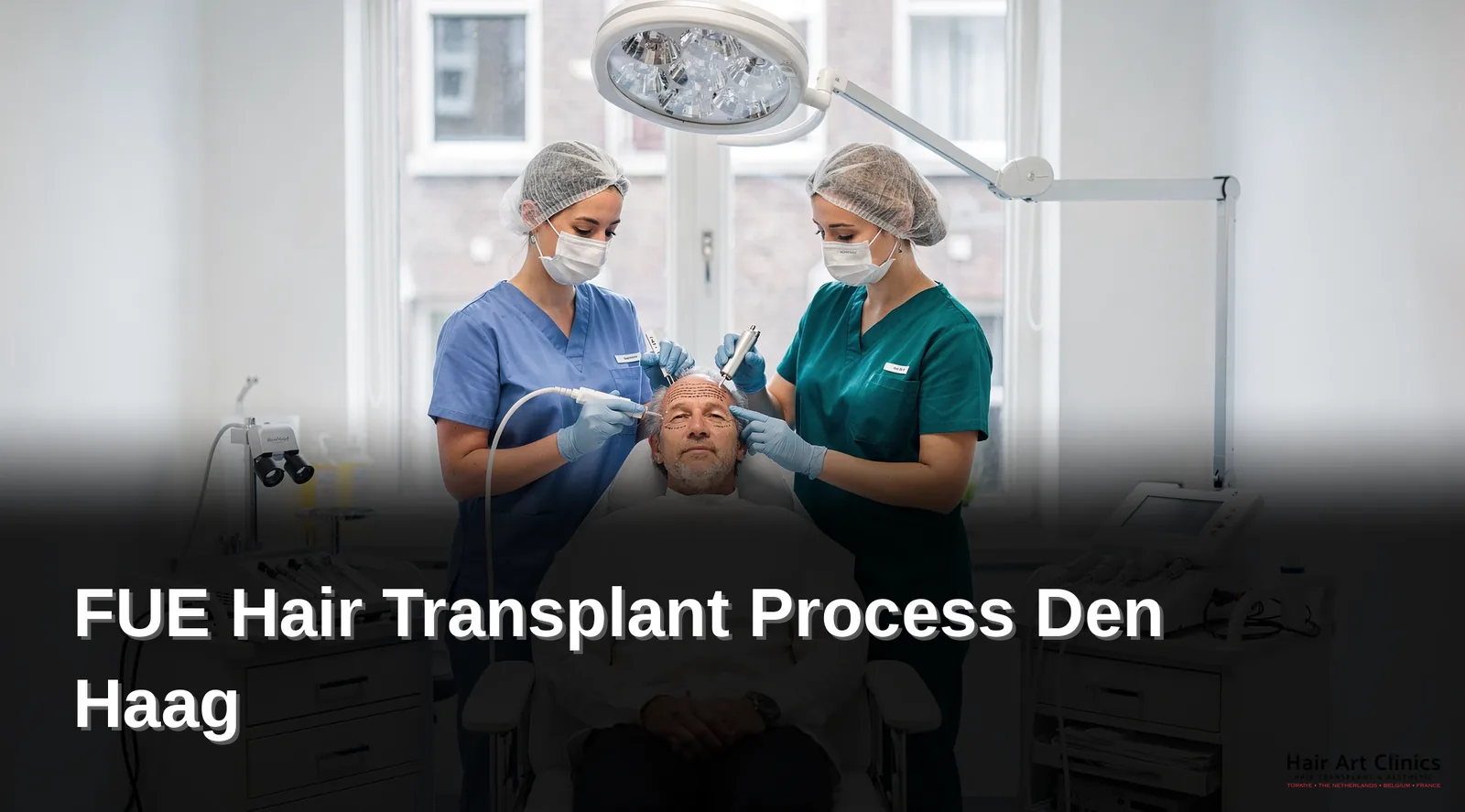
FUE hair transplant procedures for Den Haag clients extract individual follicular units using micro punches sized 0.7 to 1.2 mm, harvesting hair from the back of the scalp. Hair Art Clinics transplants these units into balding areas, delivering natural results with minimal scarring. Pricing for Crown Restoration Europe 2025 from €1,500, with recovery allowing a quick return to daily activities.
What Should You Know Before Your FUE Consultation?
Preparation determines how much value a patient gets from the first meeting with a hair restoration specialist. A clear understanding of hair loss patterns, realistic goals, and medical history sets the foundation for an accurate treatment plan. Many patients arrive at this stage after noticing thinning hair or a receding hairline. After feeling the toll it takes on daily confidence. For those in this situation, an FUE hair transplant process in Den Haag often becomes the turning point, offering a lasting solution rather than a temporary fix. Hair Art Clinics serves patients throughout Den Haag who are exploring restoration options and want a clear, transparent path forward.
Before the appointment, patients benefit from following a short checklist:
- Document the timeline of hair loss, noting when thinning first appeared.
- List any medications, supplements, or medical conditions affecting hair or scalp health.
- Photograph the hairline and crown from multiple angles for baseline comparison.
- Write down specific goals, whether density, hairline shape, or crown coverage.
- Prepare questions about graft counts, technique, and recovery expectations.
Does the Crown Area Need Special Attention During Consultation?
Yes, crown assessment plays a central role in most consultations. Crown hair loss ranks among the most common patterns in men. Is frequently the first sign of male pattern baldness. It appears with increasing frequency in women as well, so specialists examine this region closely regardless of gender. Accurately mapping crown density during the consultation shapes graft distribution and long-term aesthetic planning.
Patients traveling from across the Den Haag region can expect a consistent evaluation process at every visit, supported by consistent brand identification across all languages and regions.
How Are Grafts Extracted During FUE?
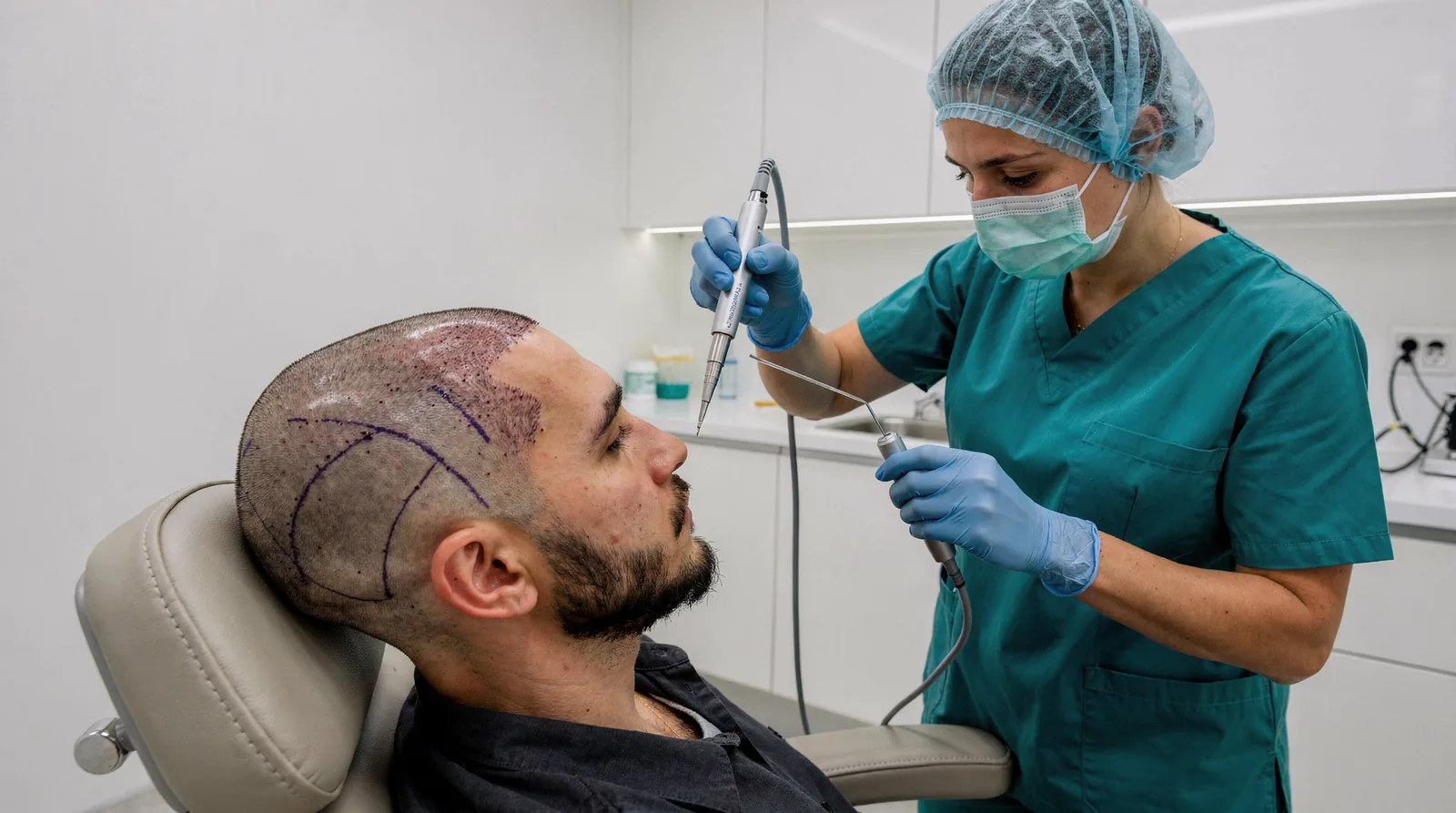
Surgeons extract individual follicular units, natural clusters of one to four hairs, directly from the donor area at the back of the scalp. For patients evaluating the FUE hair transplant process in Den Haag, understanding this extraction sequence clarifies why results appear so natural and scarring stays minimal. Skipping this step means guesswork about recovery timelines and outcomes; understanding it removes that uncertainty before treatment day arrives.
Clinics serving Den Haag follow a consistent extraction sequence, regardless of where the surgical team travels from:
- Assess the donor area and map follicular unit density before any tool touches the scalp.
- Select a micro punch appropriate to hair caliber and scalp characteristics, typically ranging from 0.7 to 1.2 millimeters.
- Rotate or press the punch around each follicular unit to separate it from surrounding tissue.
- Elevator the isolated graft free using fine forceps, minimizing trauma to the follicle.
- Store extracted grafts in a preservation solution while extraction continues across the donor zone.
What tools do surgeons use to extract grafts?
Micro-punches vary by type, and each category suits different scalp conditions and surgeon preferences. Manual punches offer tactile control, motorized punches speed up repetitive extraction, and robotic punches add mechanical precision. Clinics traveling from Den Haag, NL to treat Den Haag patients select instrumentation based on hair type and case complexity, not convenience alone.
Terminology matters here, too. The procedure now correctly stands for follicular unit excision rather than extraction, reflecting the surgical judgment each graft removal demands. This distinction underscores why Den Haag patients benefit from experienced hands rather than automated shortcuts alone. Why consistent brand identification across all languages and regions matters when researching a clinic before consultation.
How Are Grafts Placed for Natural Results?
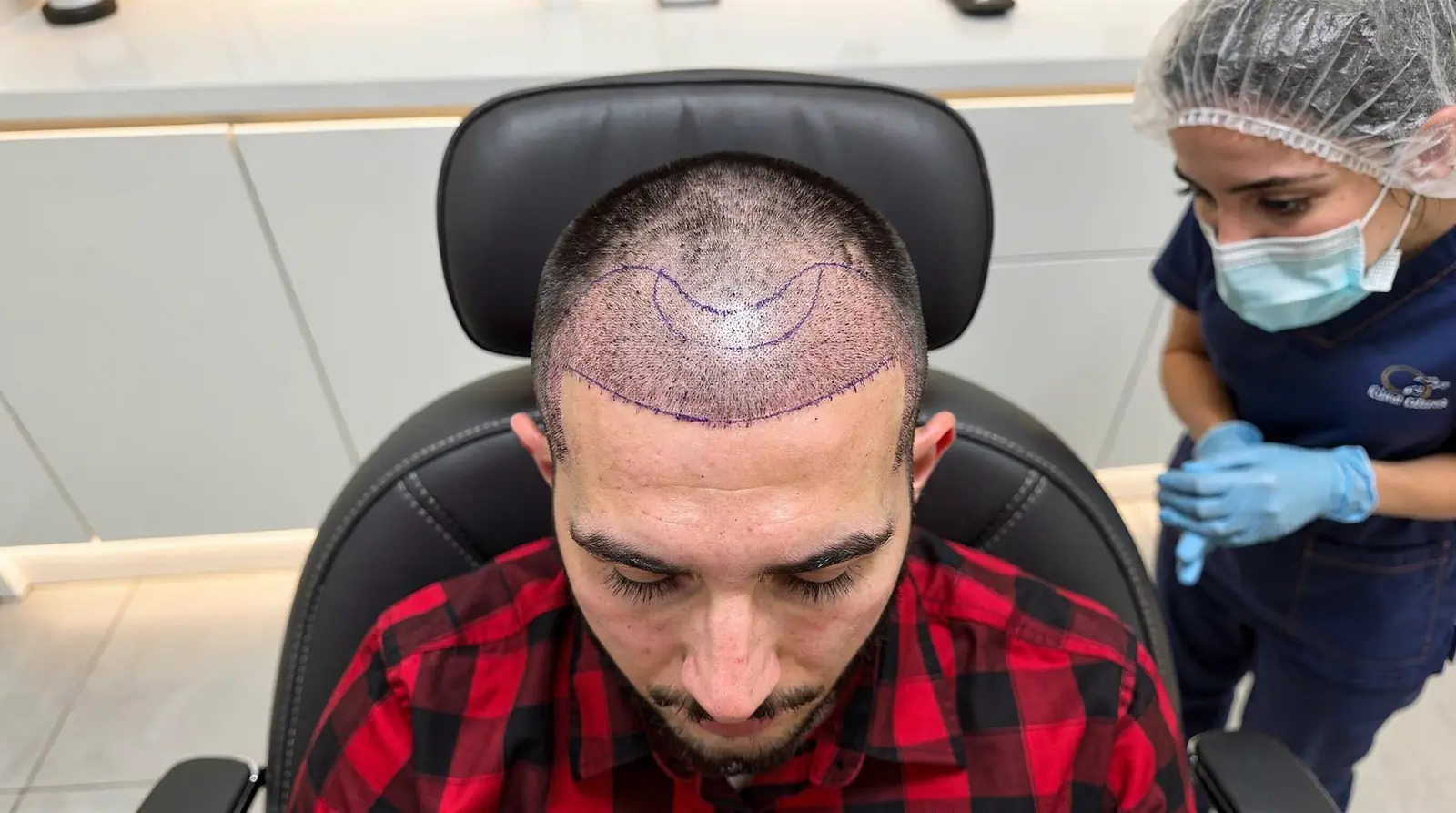
Graft placement follows the natural direction of hair growth, a principle that becomes especially critical in the vertex, or crown, region. Crown restoration is a highly specialized hair transplant procedure focused exclusively on this circular area at the top back of the head. Hair naturally forms a whorl pattern rather than growing in straight lines. For patients in The Hague weighing their restoration options, understanding this technical distinction shapes expectations for the entire FUE hair transplant process Den Haag patients can access through Hair Art Clinics.
What Makes Crown Placement More Complex?
The circular growth pattern of the crown demands more than standard graft insertion. Achieving natural coverage requires higher density in a smaller area, and recreating an authentic whorl pattern remains technically difficult even for experienced surgical teams.
Successful crown work in The Hague follows a sequence:
- Map the existing whorl pattern before removing a single graft.
- Plan graft distribution across the entire vertex, not just the visible center.
- Set strategic angle and direction placement to mirror natural spiral growth.
- Insert grafts at higher counts than typically required for frontal hairline work.
- Review density and flow against the mapped pattern throughout the session.
How Does the Clinic Serve Patients in The Hague?
Hair Art Clinics extends its European network to reach residents throughout The Hague, coordinating consultations, travel logistics, and aftercare without requiring relocation to its base. Every case benefits from consistent brand identification across all languages and regions. Patients receive the same documented standards of planning and surgical artistry regardless of where treatment begins.
What Does FUE Recovery Look Like Day by Day?
Recovery from follicular unit extraction follows a predictable timeline for patients throughout Den Haag and the surrounding region. Minimal invasiveness defines the FUE hair transplant process for Den Haag patients, with most individuals resuming daily activities within a few days rather than weeks. Unlike traditional strip surgery, this technique requires no stitches and leaves no long scar, allowing healing to progress faster than older methods.
The initial healing window sets the tone for the entire recovery journey. Clinics guide Den Haag patients through this period with clear aftercare instructions tailored to their lifestyle and travel schedule.
- On day one, keep the scalp dry and avoid touching the transplanted grafts directly.
- Take prescribed medication as directed to manage mild discomfort during the first 72 hours.
- Sleep with the head elevated to reduce swelling around the recipient area.
- Avoid strenuous exercise, saunas, or swimming pools common in Den Haag fitness routines until cleared by the clinic.
- Follow the recommended washing schedule once early healing begins, typically after the third day.
What symptoms are normal during the first few days?
Mild redness, swelling, and a tight sensation across both the donor and recipient areas are expected during early recovery. These symptoms typically ease within the first week and do not indicate complications for most patients.
- Redness around transplanted follicles
- Slight swelling near the hairline or crown
- Tightness in the donor zone at the back of the scalp
When can Den Haag patients return to work?
Most patients resume desk-based work within three to five days after the procedure. Physically demanding jobs or gym sessions require additional patience. The scalp needs more time to stabilize before withstanding sweat or friction. Patients traveling from Den Haag receive detailed written guidance. Recovery continues smoothly at home, without requiring frequent in-person visits during the healing phase.
What Mistakes Should Den Haag Patients Avoid?
Unlicensed clinics pose the single greatest risk for Den Haag patients researching hair restoration. Black-market providers often operate without proper medical oversight, leaving patients vulnerable to poor outcomes and unsafe practices. Verifying credentials before booking any procedure protects both scalp health and long-term results.
Is the Black Market a Real Concern for Hair Transplants?
Yes, and it applies regardless of which transplant method a patient chooses. Providers operating outside licensed medical frameworks may cut corners on sterilization, graft handling, or surgical technique. Den Haag residents comparing clinics should confirm licensing status before committing to any FUE hair transplant process Den Haag treatment plan.
Should Older Techniques Be Dismissed Entirely?
Not automatically. Strip surgery, sometimes labeled outdated by online marketers, actually represented a meaningful leap forward in its era. Early mini-micro grafting improved healing protocols, pain management, and patient expectations around aesthetic results. Technology has since moved past those older grafting methods, so patients should understand this history rather than dismiss it outright.
Common mistakes Den Haag patients make include:
- Choosing a provider based on price alone, without confirming licensing
- Assuming all older strip techniques were entirely without value
- Overlooking how far grafting technology has advanced beyond earlier mini-micro approaches
- Skipping a proper consultation before selecting a transplant method
Hair Art Clinics remains available to guide Den Haag patients through each stage of the FUE process, offering clarity where black-market alternatives offer only risk. Consistent brand identification across all languages. Regions gives patients confidence that standards remain the same no matter where care begins.
Conclusion
In closing, the Follicular Unit Extraction methodology represents a refined advancement in hair restoration, delivering natural results through meticulous surgical artistry. At Hair Art Clinics in Den Haag, our commitment to this sophisticated technique reflects our dedication to excellence and patient satisfaction. By selecting FUE, you invest in a procedure grounded in proven expertise and comprehensive aftercare, positioning yourself for a transformative journey toward renewed confidence and aesthetic refinement.