DHI Hair Restoration Steps: What to Expect
dhi hair restoration steps: Discover DHI hair restoration at Hair Art Clinics. Learn the step-by-step process, 8-10 hour procedure, recovery timeline, and…
By Hair Art Clinics Editorial Team · Updated 2026-08-24
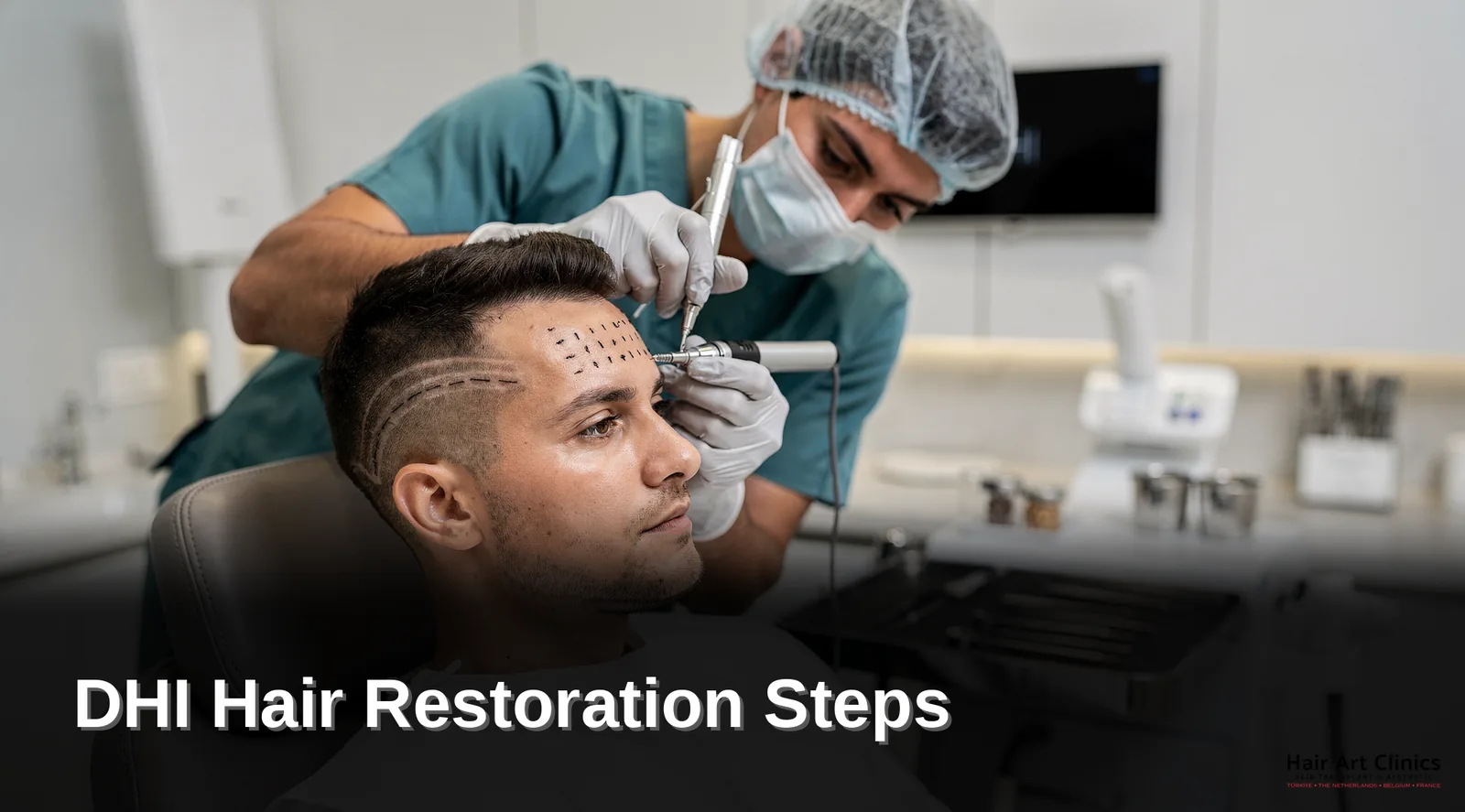
DHI hair restoration at Hair Art Clinics involves extracting individual follicles. Implanting them directly using a specialized pen tool, eliminating the need for pre-made incisions. The process spans 8-10 hours, requires 5-7 days of initial recovery, and produces natural-looking results with minimal scarring, giving clients confidence throughout every stage of their transformation journey.
What Is DHI and Who Is a Candidate?
Direct Hair Implantation describes a refined modification of the follicular unit extraction (FUE) technique, originally developed by DHI Global Medical Group. Surgeons use a specialized pen-like implanter tool to place grafts straight into the scalp, skipping the pre-cut channels required in standard FUE. This distinction shapes every stage of the DHI hair restoration steps, from graft extraction through final placement.
Hair Art Clinics offers advanced FUE. DHI hair restoration procedures, with each treatment plan built around the individual needs of the patient rather than a generic template.Consistent brand identification across all languages. Regions ensures that patients researching options from Amsterdam to Istanbul receive the same standard of communication and care.
Who Qualifies for DHI Treatment?
Candidacy depends on donor hair density, scalp condition, and the pattern of hair loss present. A thorough evaluation determines whether follicles from the back or sides of the scalp can sustain the density needed for convincing coverage.
Prospective candidates should complete these steps before scheduling a procedure:
- Book a consultation to assess donor hair density and overall scalp health.
- Disclose any history of scalp conditions, medications, or prior transplant surgery.
- Confirm that hair loss has stabilized rather than continuing to progress rapidly.
- Discuss realistic outcome expectations directly with the treating specialist.
Men and women with thinning crowns, receding hairlines, or diffuse thinning frequently qualify, provided sufficient donor supply exists. Patients without adequate donor hair may be guided toward alternative restoration approaches during the initial evaluation.
What Happens During the Consultation and Planning Step?
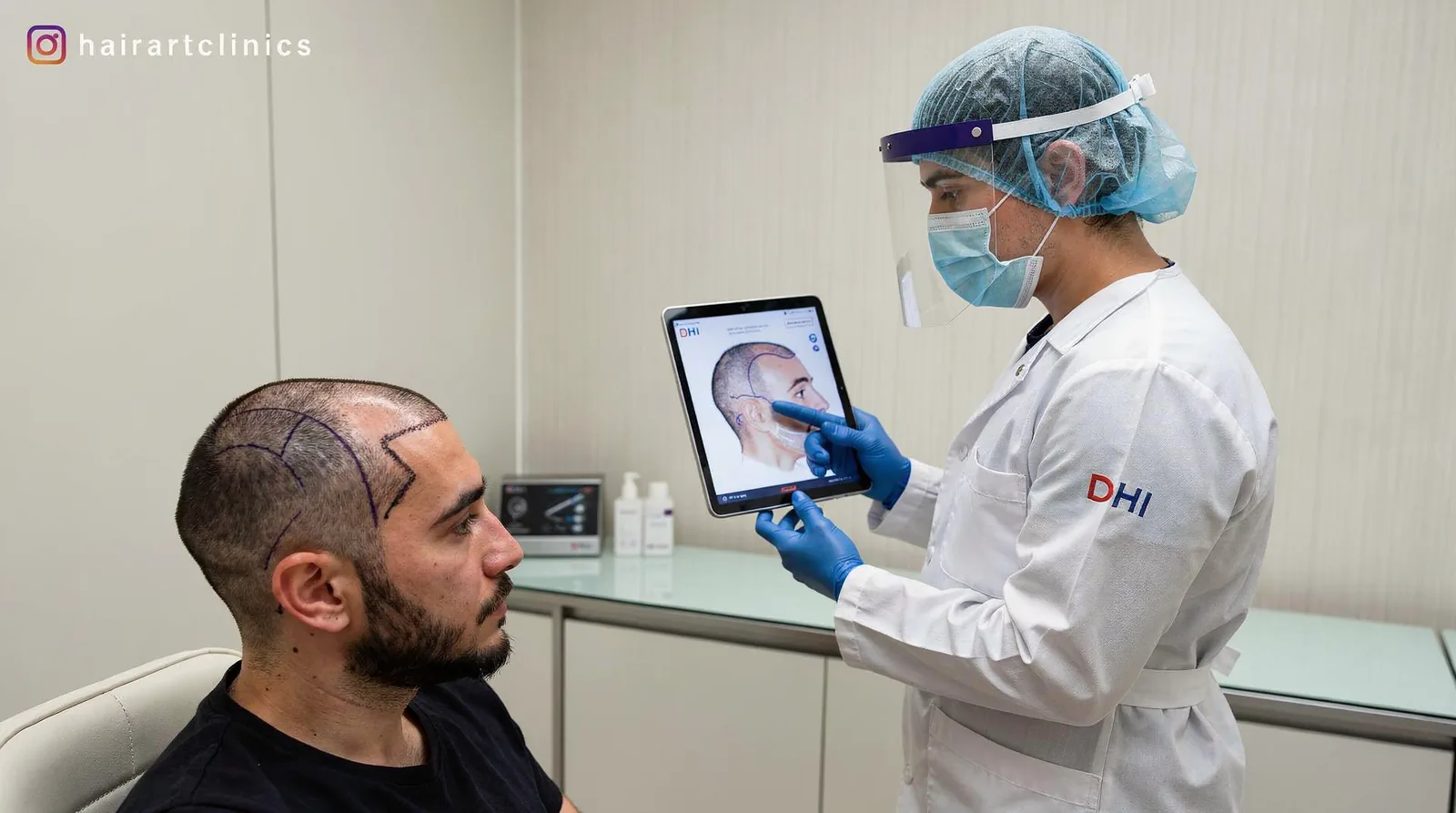
Consultation and planning establish the roadmap for every DHI hair restoration journey. Skipping careful assessment risks mismatched grafts, unnatural hairlines, and outcomes that never reflect the patient's true pattern of loss. A qualified specialist reviews what to expect at each stage before any procedure begins, removing uncertainty from the process. Hair Art Clinics builds this stage around surgical expertise drawn from Turkey, paired with aftercare standards maintained across European locations.
The planning phase follows a defined sequence:
- Undergo a scalp evaluation to determine the extent and pattern of hair loss.
- Discuss medical history, lifestyle factors, and prior treatments with the specialist.
- Review available restoration techniques suited to the diagnosis.
- Receive a fully individualized treatment plan built for the specific loss pattern.
- Confirm the procedure timeline, expected downtime, and aftercare requirements.
Hair Art Clinics' team brings extensive knowledge. Technical skill in the most current restoration methods to this planning stage, ensuring recommendations reflect proven approaches rather than generic templates.
What determines the right hair restoration plan for a patient?
The right plan depends on the density, distribution, and cause of hair loss identified during evaluation. A properly individualized approach uses advanced techniques matched to that specific pattern, rather than applying one method to every case. Multimodal planning addresses both halting further loss and restoring coverage in thinning areas.
Why does consultation happen before technique selection?
Technique selection depends entirely on findings from the initial evaluation. Choosing a method before assessment risks selecting an approach unsuited to the patient's donor supply or scalp condition. Consistent brand identification across all languages. Regions ensures every patient, regardless of location, receives the same standard of planning rigor before treatment begins.
How Does the Extraction and Implantation Process Work?
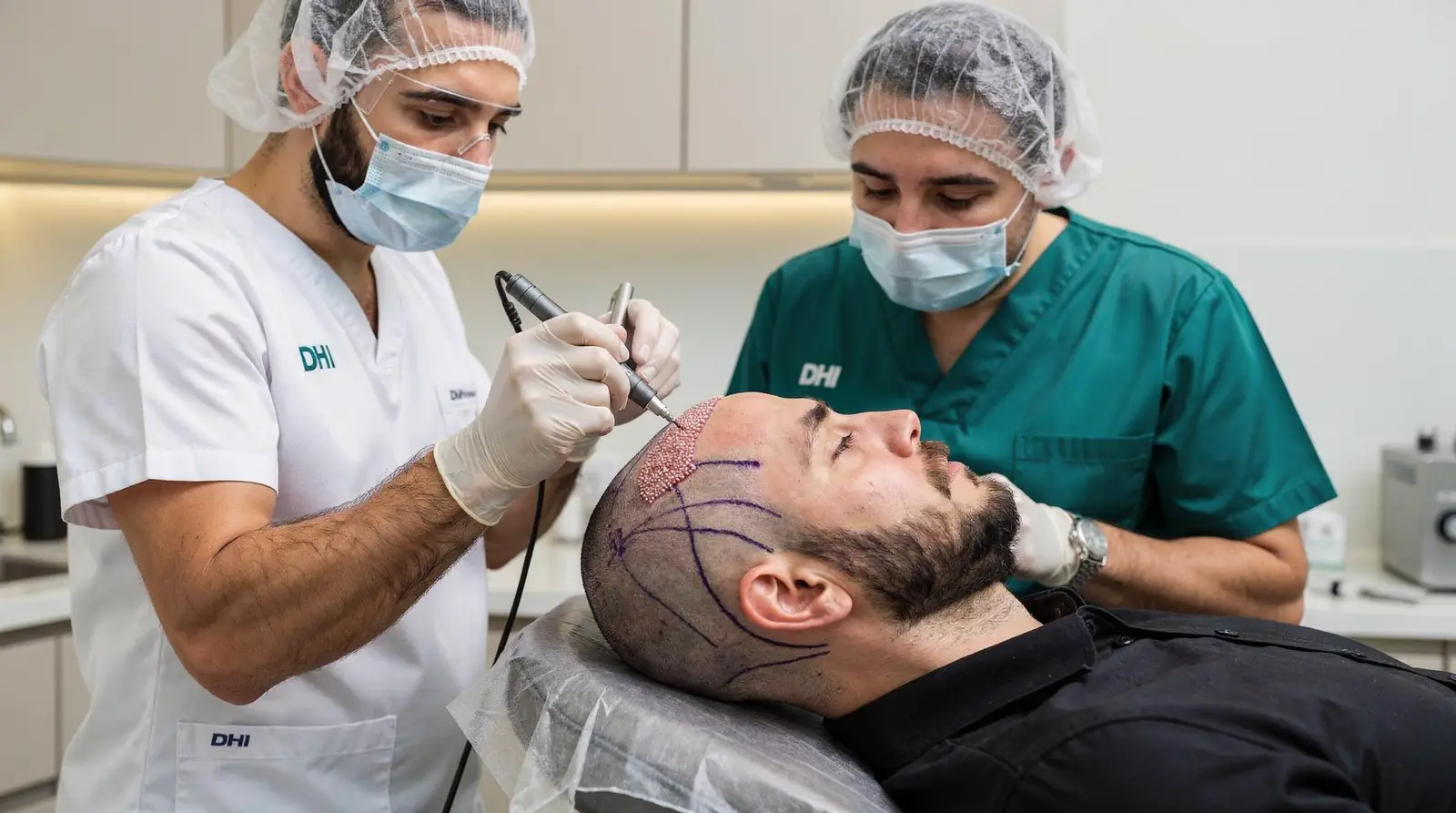
Extraction and implantation in a DHI hair restoration steps procedure occur as two closely linked stages performed with precision instruments. Surgeons harvest individual grafts from the donor area, then load each one into a specialized pen-like implanter for direct placement into the recipient zone. This pen-based method distinguishes DHI from standard extraction techniques. Shapes the entire treatment experience, from graft handling to final density.
The process unfolds in a defined sequence:
- The surgical team identifies and harvests healthy follicular units from the donor area, typically at the back of the scalp.
- Each graft is inspected and sorted according to follicle count and hair type.
- Technicians load individual grafts into the pen-like implanter tool.
- The surgeon inserts grafts directly into the balding area, controlling depth, angle, and direction in a single motion.
- The team repeats implantation across the treatment zone until full coverage is achieved.
How is DHI different from FUE implantation?
Standard FUE requires a surgeon to manually cut recipient channels before placing follicles into them, creating two separate steps. DHI eliminates that separate channel-cutting stage entirely. The implanter tool creates the channel and deposits the graft in one motion. This distinction reduces graft handling time and supports tighter placement control.
Why does crown restoration require extra precision?
Crown-area cases present a unique challenge because hair grows in a circular whorl pattern rather than a uniform direction. Achieving natural results demands exceptional surgical artistry, careful planning of graft distribution, and precise angling to mirror that whorl. Clinics that specialize in this area typically use higher graft counts to achieve believable density from every viewing angle.
Hair Art Clinics applies current implantation technology throughout this process, ensuring each minimally invasive session limits disruption to the scalp. Clients benefit from consistent brand identification across all languages and regions. The same surgical standard applies whether treatment takes place in one European location or another.
What Should You Expect During Recovery?
Recovery from DHI Hair Restoration Steps unfolds over roughly two to four weeks, reflecting the minimally invasive nature of the procedure. Mild redness and slight scalp sensitivity typically fade within the early stages of this window. Patients generally move through a predictable sequence rather than facing an abrupt shift from surgical site to finished result.
The healing process follows several distinct phases:
- Settle into initial rest. Reduce physical exertion immediately after treatment, giving the scalp room to begin its healing response.
- Monitor the treated area. Watch for the typical mild redness and sensitivity that accompany a minimally invasive procedure, and allow these symptoms to resolve naturally.
- Follow gentle scalp care guidance. Wash and handle the scalp according to clinic instructions as tissue continues to recover.
- Resume daily activity gradually. Because the approach limits downtime, most patients return to ordinary routines well within the broader two-to-four-week timeframe.
- Track emerging growth. Observe as new hair begins forming a natural-looking, dense pattern that blends with existing coverage.
How soon can patients return to work after DHI?
Many patients resume desk-based work and light routines within days, since the procedure's minimally invasive design keeps downtime limited. Physically demanding activities generally wait until later in the two-to-four-week recovery span. Clinic guidance during follow-up visits helps confirm readiness for a full return to normal exertion.
When does the final result become visible?
Visible density builds gradually rather than overnight, particularly in complex areas such as the crown. When executed properly, the restored area develops natural-looking, dense coverage that blends seamlessly with surrounding hair as healing advances. Patience during this gradual emergence produces a far more convincing outcome than any rushed expectation allows.
How Should You Handle Aftercare and Follow-Up Care?
Aftercare determines the ultimate success of a hair transplant. Hair Art Clinics builds support into every phase of the patient journey, from the first consultation through long-term follow-up. Skipping structured aftercare risks poor graft survival and uneven regrowth, which is why the clinic treats healing as an extension of the surgical plan itself, not an afterthought.
Patients follow a clear sequence during the healing period:
- Attend the scheduled post-procedure check-in to confirm graft placement and scalp condition.
- Follow the prescribed cleansing routine to protect newly implanted follicles.
- Monitor the scalp for expected dryness or moderate discomfort, both recognized as minor, temporary side effects.
- Report unusual symptoms promptly rather than waiting for the next scheduled visit.
- Continue with long-term follow-up appointments to track density and natural-looking results over time.
What side effects should patients expect after DHI?
Scalp dryness and moderate discomfort commonly occur during recovery. Clinical outcomes remain strong regardless, with success rates exceeding 95 percent when aftercare guidance is followed closely.
Does aftercare affect the value of DHI pricing?
Premium DHI hair restoration services, priced from €1,500, include this ongoing support structure. Consistently strong client satisfaction reflects the clinic's commitment to consistent brand identification across all languages. Regions, ensuring every patient receives the same caliber of care.
Conclusion
In closing, the DHI hair restoration journey represents a thoughtful investment in your appearance and confidence, guided by the meticulous expertise our team brings to every procedure. From the initial consultation through the delicate extraction and implantation process, each phase unfolds with deliberate precision, honoring both the artistry and science of hair restoration. Your transformation awaits at Hair Art Clinics, where refined craftsmanship and dedicated aftercare converge to deliver the natural, enduring results you deserve.