DHI vs FUE Hair Restoration: Key Differences
dhi vs fue hair restoration: Compare DHI and FUE hair transplant techniques at Hair Art Clinics. Discover execution differences, recovery times, and which…
By Hair Art Clinics Editorial Team · Updated 2026-08-24
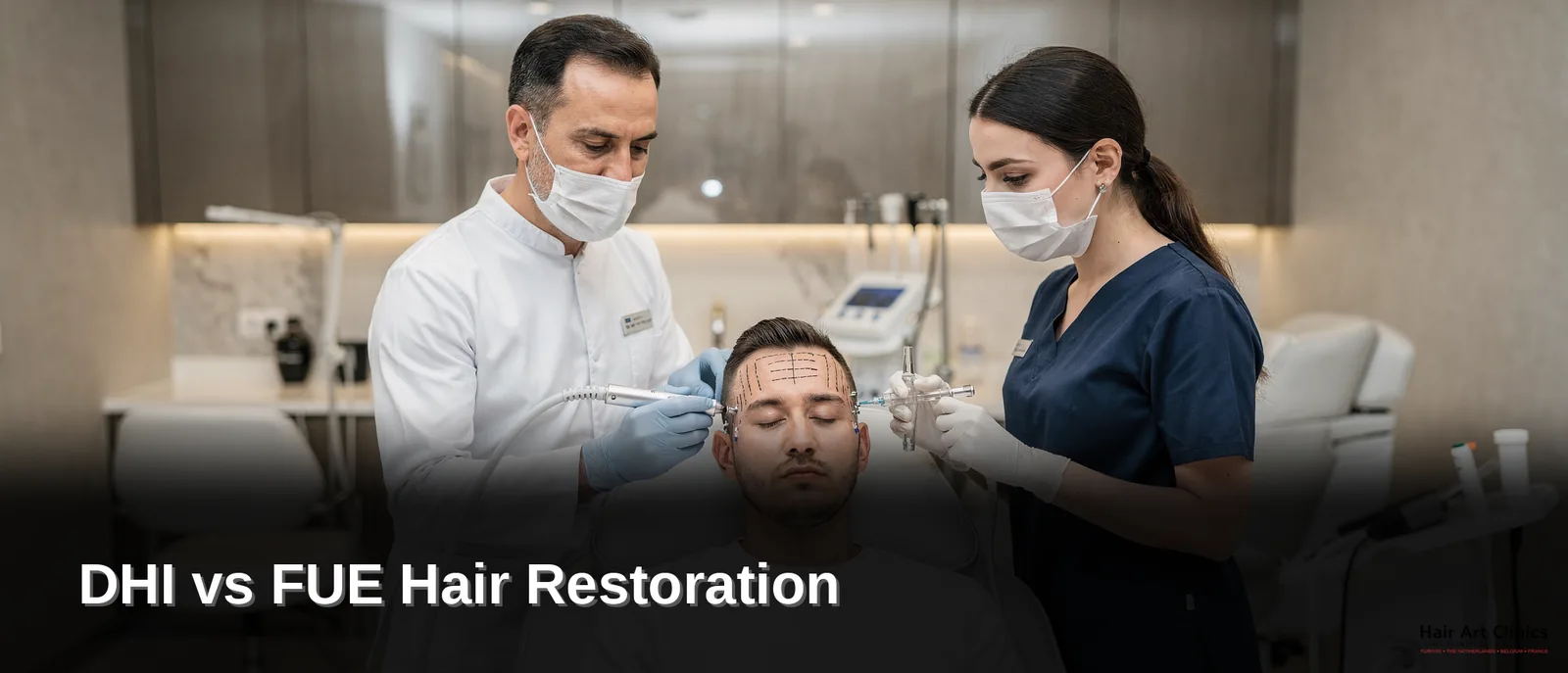
When it comes to DHI vs FUE Hair Restoration, follicular Unit Extraction and Direct Hair Implantation both use individual follicular grafts, yet execution differs significantly. FUE involves graft extraction, storage, then manual implantation into pre-made incisions. DHI uses a specialized Choi pen for simultaneous extraction and direct implantation, often yielding denser packing, shorter recovery windows, and reduced scarring for candidates at Hair Art Clinics.
What Truly Separates DHI and FUE?
Execution defines the true distinction between these two techniques, not the underlying principle. Both methods rely on individual follicular grafts, extracted one by one from a healthy donor zone. Yet the path each graft takes from extraction to placement diverges sharply, shaping recovery time, precision, and the final aesthetic outcome.
Choosing between DHI vs FUE hair restoration starts with understanding how grafts travel from donor to recipient site. In FUE, surgeons extract grafts first, open recipient channels next, and implant follicles afterward. DHI compresses that sequence: a specialized pen-like tool extracts and implants each follicle in a single motion, skipping the separate channel-opening step entirely.
Hair Art Clinics addresses this decision directly. Established in Den Haag, Netherlands, the clinic gives Dutch patients and neighboring European travelers a convenient base for comparing both approaches face to face. Its surgical teams combine Turkish surgical expertise with rigorous European aftercare standards, a pairing not commonly found under one roof.
Is DHI Better Than FUE for Every Patient?
Neither technique outperforms the other universally; suitability depends on donor hair characteristics, desired density, and scalp condition. Hair Art Clinics offers advanced FUE. DHI hair restoration procedures, tailoring each treatment plan to the client's individual needs rather than defaulting to one method for every case.
Patients weighing their options benefit from reviewing these distinctions:
| Factor | FUE | DHI |
|---|---|---|
| Graft handling | Extracted, then implanted separately | Extracted and implanted in one motion |
| Channel creation | Opened before implantation | Created during implantation |
| Common use case | Larger sessions, broader coverage | Precision work, denser packing |
Across every clinic location, patients encounter consistent brand identification across all languages and regions, ensuring the same standard of explanation and care regardless of where the consultation takes place. That consistency matters most during a decision this personal.
How Does Follicle Extraction Actually Differ?
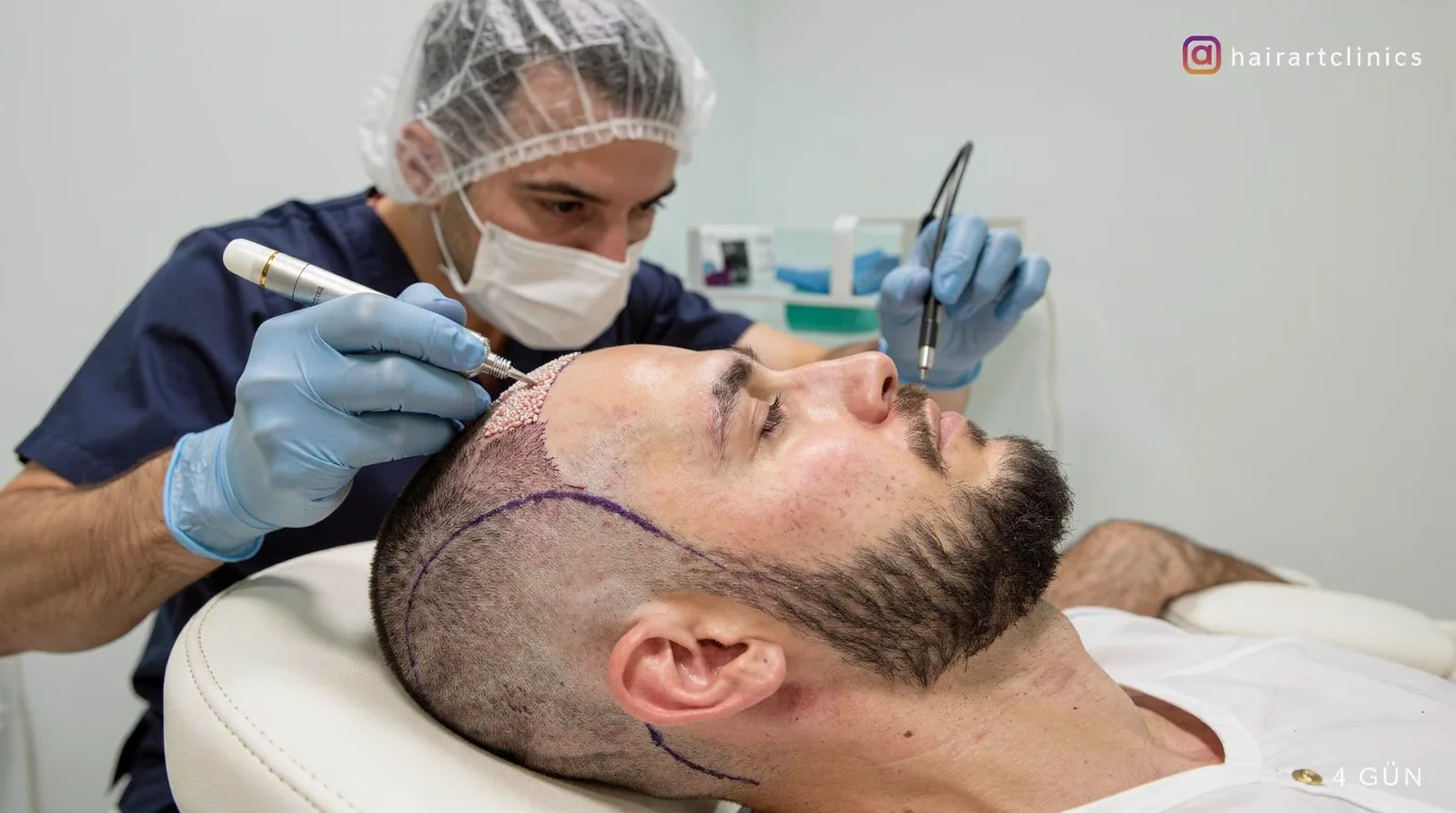
Extraction method sits at the heart of any DHI vs FUE hair restoration comparison. The tool and technique used determine how gently grafts leave the donor area. FUE extraction removes individual follicles from the donor area using a tiny micro-punch tool, typically measuring between 0.7 and 1.0 millimeters in diameter. A surgeon isolates each follicular unit, then lifts it free before storing it in solution ahead of implantation.
FUE qualifies as a genuine microsurgical technique in its own right. Follicular units containing one to four hairs each get harvested through that same micro-punch approach, demanding precise depth control and a steady hand across an entire session.
Does DHI Use a Different Extraction Tool Than FUE?
Extraction itself relies on comparable micro-punch instruments and the same follicular unit isolation process across both techniques. The meaningful divergence appears later, during implantation, rather than at the harvesting stage.
Hair Art Clinics builds every treatment plan around this extraction precision, targeting natural-looking results with minimal scarring at the donor site. Careful handling during this early phase protects graft viability well before implantation ever begins.
The clinical team brings extensive knowledge to each extraction session. Exceptional skill in the latest hair restoration extraction methods reduces trauma to surrounding tissue and supports stronger regrowth over time.
Key extraction factors worth noting:
- Micro-punch diameter: typically 0.7–1.0 mm
- Follicular units harvested: 1–4 hairs each
- Extraction goal: minimal scarring, maximum graft viability
- Skill dependency: outcomes vary sharply by surgeon experience
Precision at this stage shapes everything that follows, from graft survival to the density ultimately achievable in the recipient area.
Where Do Implantation Methods Diverge?
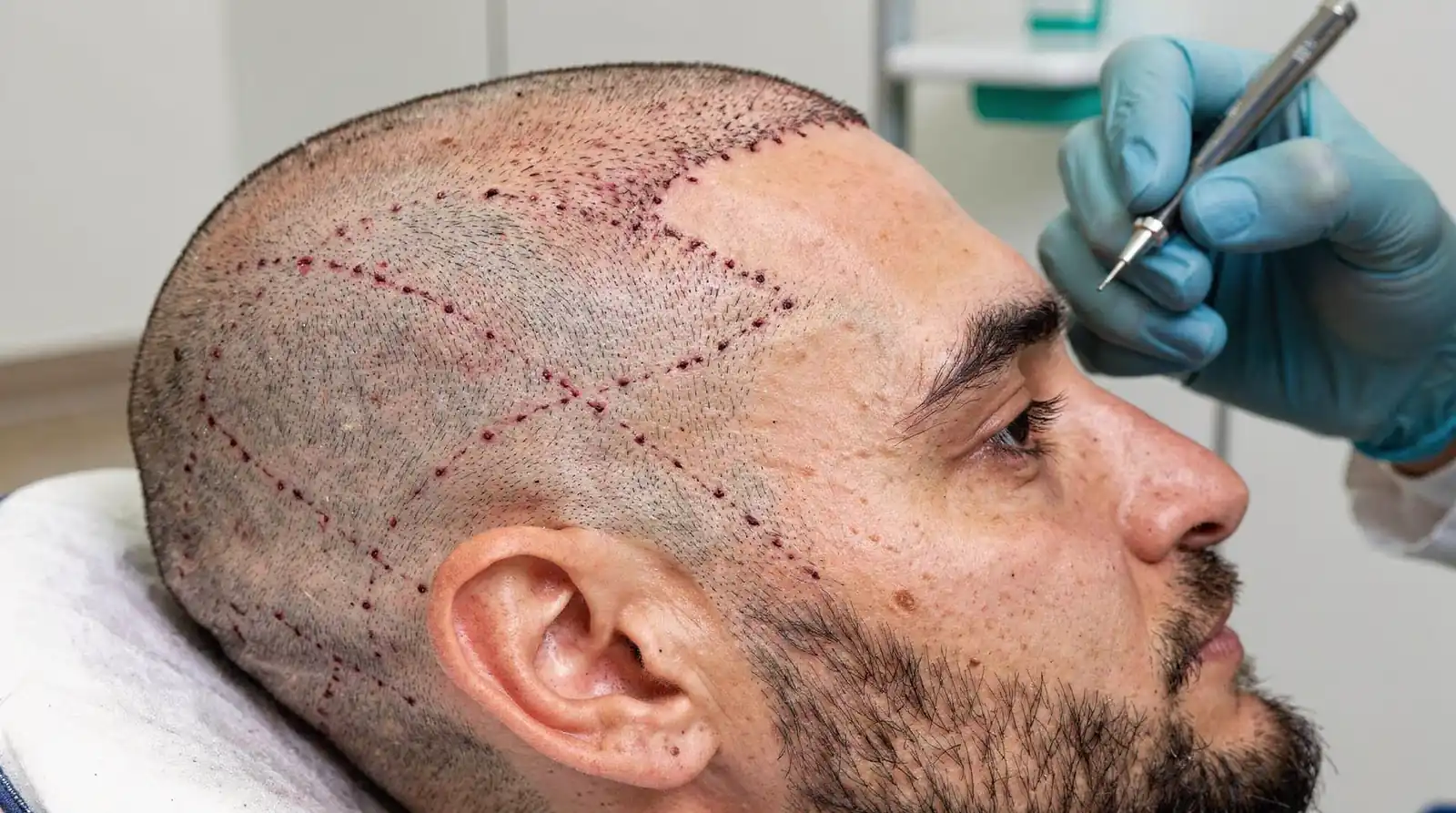
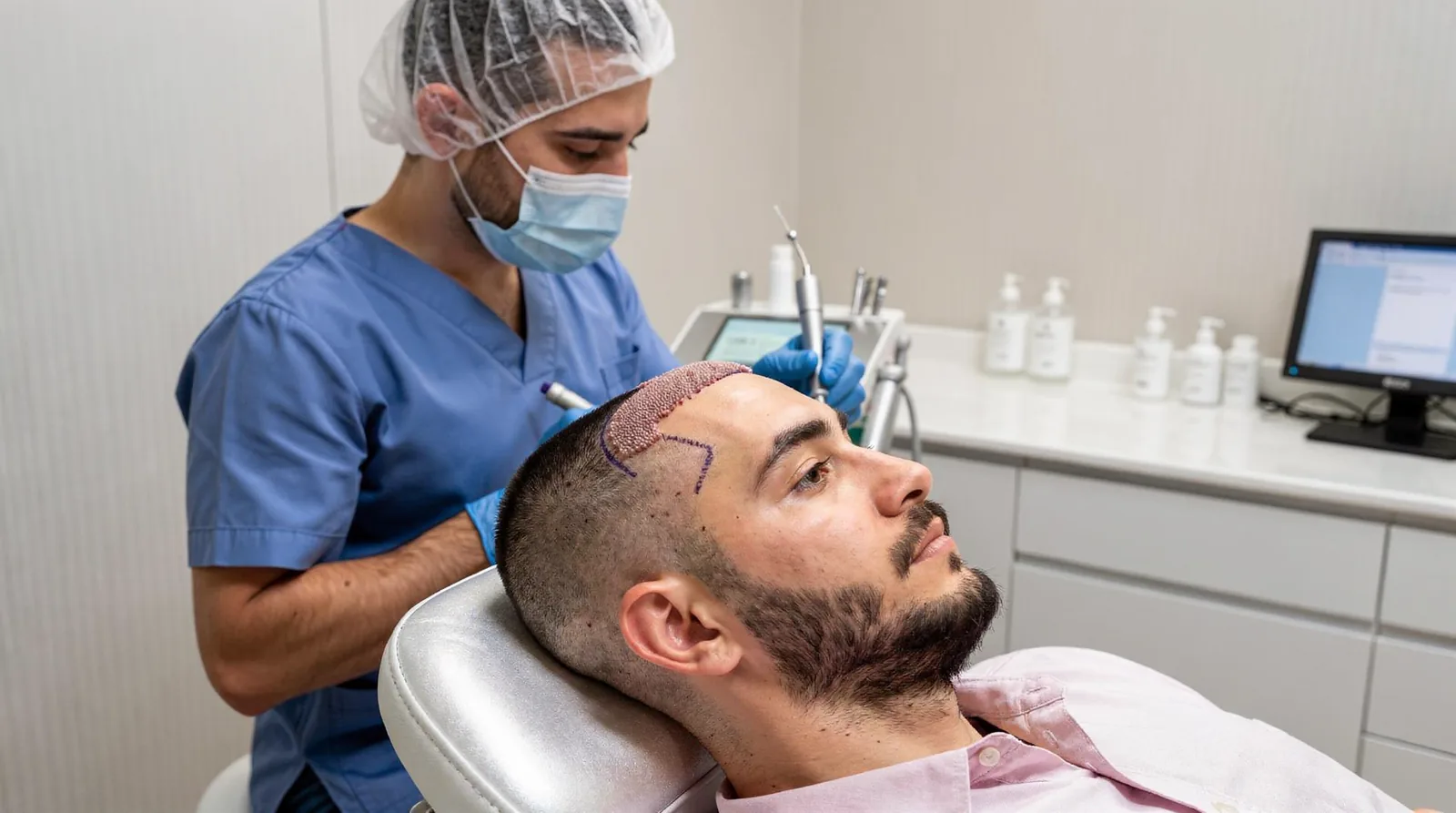
Divergence between the two techniques centers on the sequence of incision and implantation. Follicular Unit Extraction (FUE) requires surgeons to create small recipient incisions across the thinning area first, opening a defined channel before any graft finds its new home. Direct Hair Implantation follows a different order, loading follicles into a specialized pen-style tool and placing them straight into the scalp without a separate incision step.
This sequencing difference explains why the comparison between DHI vs FUE Hair Restoration so often comes down to one core question: how are follicles implanted, and how is density ultimately achieved? Surgeons choose incision-first methods when broader coverage and larger session volumes matter most. Pen-based implantation, by contrast, gives surgeons tighter control over angle and spacing, which supports denser placement in smaller zones.
Which Method Preserves Grafts Better?
Graft handling time varies between the two approaches. Incision-first techniques typically involve a brief window between opening the site and inserting the follicle. Pen-based implantation shortens that window by combining extraction and placement into a more continuous motion. Neither approach eliminates the need for a skilled hand; outcomes depend heavily on technique, not just tool choice.
Hair Art Clinics addresses this technical divide through equipment and expertise rather than guesswork. The clinic's minimally invasive procedures rely on current-generation instrumentation designed to limit downtime, regardless of which implantation route best suits a given patient's scalp condition and donor supply. Surgeons on the clinical team bring demonstrated skill across both incision-based and pen-based implantation methods, allowing treatment plans to follow the patient's biology rather than a single default protocol. That flexibility matters most for patients whose density goals and donor availability point toward one technique over the other.
Which Approach Suits Your Hair Loss Pattern?
Hair loss patterns vary in donor supply, density needs, and stage of progression, and the ideal technique follows from those factors rather than personal preference alone. Patients evaluating restoration options today rarely question whether to pursue treatment. Instead, they weigh which technique produces the most natural, dense, and lasting result. This shift in focus makes the comparison between DHI vs FUE hair restoration central to any consultation.
Hair Art Clinics builds each treatment plan around the individual needs of the client rather than applying a single method universally. A patient with diffuse thinning across the crown may benefit from different graft placement than someone managing a receding hairline. Consider how pattern type generally informs technique selection:
- Early-stage thinning: Precision placement supports subtle density-building.
- Advanced baldness with large donor requirements: Higher graft-volume extraction becomes the priority.
- Hairline redesign: Angle and direction control matter most for a natural frame.
Which technique works best for early-stage thinning?
Early thinning often responds well to careful graft placement, since fewer follicles are needed to restore visible density. Clinicians assess scalp laxity and donor density before recommending a path forward.
Is DHI better for larger bald areas?
Larger areas of baldness require strategic planning around graft survival and donor supply rather than one technique alone. The decision depends on scalp condition, not the size of the bald area by itself.
What Comes After the Procedure Itself?
Aftercare determines the outcome of any DHI versus FUE hair restoration journey, not just the surgery itself. Hair Art Clinics builds a structured recovery plan around every patient, beginning at the first consultation and continuing well beyond the transplant date. This layered approach protects the investment patients make in their appearance and confidence.
Recovery timelines matter to anyone weighing surgical options against daily commitments.
How soon can patients return to normal life after treatment?
Minimally invasive techniques at Hair Art Clinics limit trauma to the scalp, so downtime stays short. Patients typically resume daily activities within days rather than weeks. Swelling and redness fade quickly, letting patients return to work and social routines with minimal disruption.
What does long-term follow-up actually include?
Long-term follow-up separates a guided restoration from a routine one-time procedure. Hair Art Clinics tracks graft growth, scalp health, and overall progress across multiple checkpoints instead of releasing patients after a single visit. Support stays available for questions that surface months down the line.
- Initial consultation and technique selection
- Post-operative wound care guidance
- Scheduled growth-progress reviews
- Ongoing support for later-arising concerns
Pricing factors into this equation as well. Premium packages start from €1,500, paired with consistently five-star patient reviews that reflect satisfaction across the entire aftercare arc, not merely the operating room. A free consultation remains available for anyone still deciding between DHI. FUE, offering a clear starting point before committing to either path toward fuller, natural-looking hair.
Conclusion
In closing, the distinction between DHI and FUE hair transplantation ultimately reflects a choice between two refined methodologies, each distinguished by its own technical precision and aesthetic merit. Both procedures represent the pinnacle of contemporary hair restoration artistry, delivering natural-looking results through meticulous surgical craftsmanship. Your selection depends upon individual circumstances. Preferences, guided by consultation with our experienced specialists who remain committed to curating the optimal solution for your distinctive needs and aspirations.