FUE vs DHI Consultation: Choosing Your Hair Transplant Technique
consultation for fue dhi techniques: Compare FUE and DHI hair transplant techniques at Hair Art Clinics. Discover recovery times, scarring differences, and…

By Hair Art Clinics Editorial Team · Updated 2026-08-24
When it comes to Consultation for FUE DHI Techniques, FUE hair transplants require 6-8 hours with 7-10 days recovery. DHI takes 8-10 hours but heals faster, within 5-7 days. FUE leaves minimal micro-dot scarring; DHI leaves almost none. Hair Art Clinics tailors technique selection per client, combining Turkish surgical expertise with European aftercare standards for natural, lasting results.
What Sets FUE and DHI Apart?
Follicular Unit Extraction (FUE) and Direct Hair Implantation (DHI) separate themselves through the sequence of graft removal and placement, not through the grafts themselves. Both techniques rely on individual follicular units harvested one at a time, yet the path each graft travels from scalp to scalp differs sharply. Patients weighing these options in Den Haag, Netherlands, benefit from Hair Art Clinics' local presence, which gives Dutch clients a familiar starting point for comparing restoration methods before committing to a plan.
Global adoption tells its own story. FUE stands as the most widely performed hair transplant technique worldwide, a status earned through decades of refinement and consistent surgical outcomes. DHI, by contrast, represents a more recent evolution built on the same minimally invasive foundation.
| Feature | FUE | DHI |
|---|---|---|
| Graft handling | Extracted, then implanted via incision | Extracted and implanted directly with a pen tool |
| Invasiveness | Minimally invasive | Minimally invasive |
| Global usage | Most widely used technique | Growing alternative |
Is DHI Less Invasive Than FUE?
Neither technique qualifies as invasive surgery in the traditional sense. Both fall firmly within the minimally invasive category, a marked departure from older strip-based methods.
How Did Hair Transplant Methods Evolve?
Hair transplantation has moved away from strip surgery, known as FUT, over the past two decades. Surgeons transitioned toward refined, minimally invasive approaches like FUE and DHI, prioritizing natural results and reduced scarring. This shift shapes how clinics now structure every consultation for FUE and DHI techniques, helping candidates match their goals to the right method.
How Does Each Procedure Actually Work?
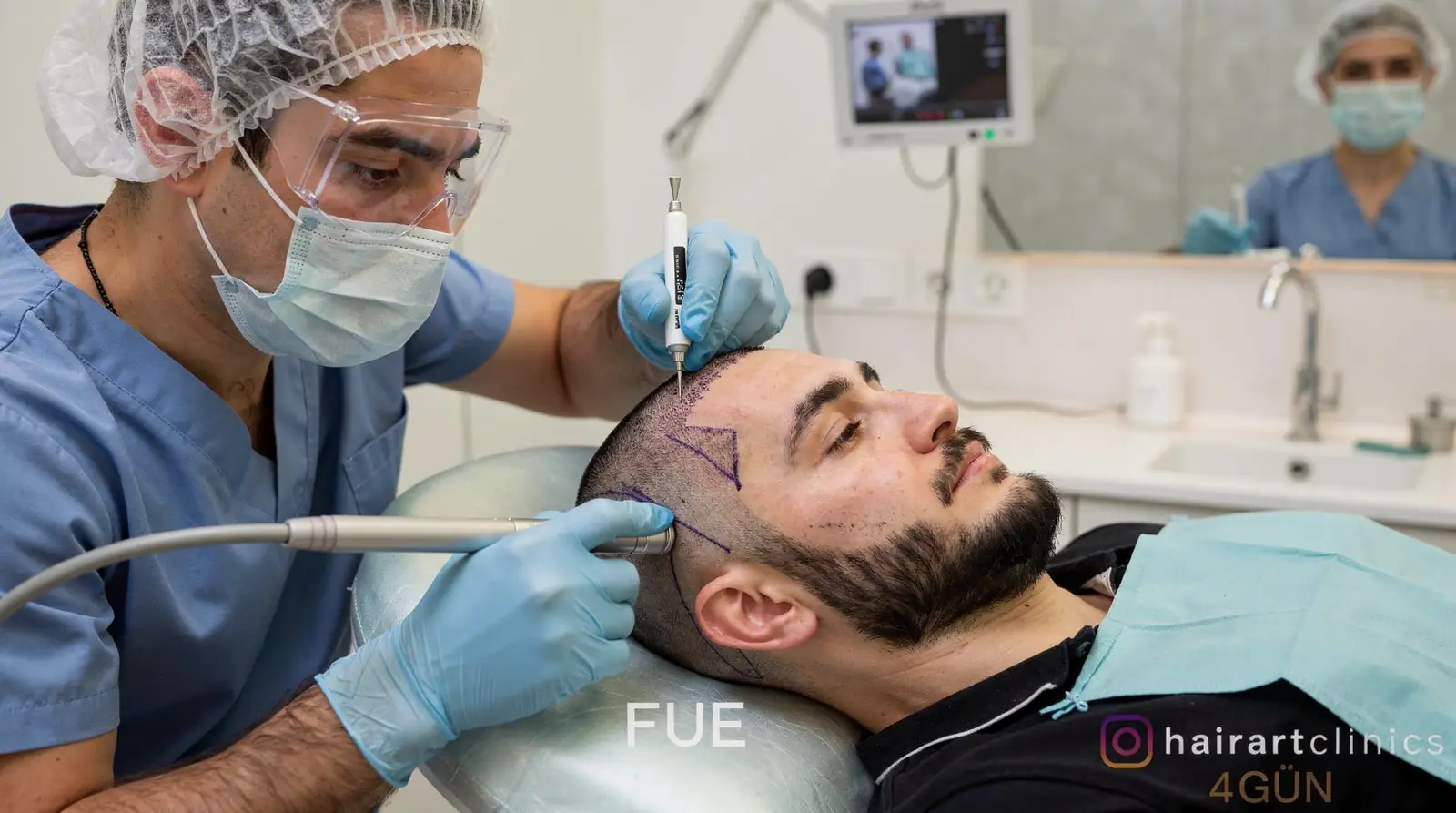
Extraction opens both procedures, yet the paths split from there. A standard FUE (Follicular Unit Extraction) session runs roughly 6 to 8 hours. DHI (Direct Hair Implantation) typically stretches to 8 to 10 hours. That extra time reflects a fundamentally different implantation process, not a slower version of the same technique.
FUE starts with a surgeon removing individual follicles from the donor area, usually the back of the scalp, using a tiny punch tool. Those grafts are then set aside before being placed into small incisions the surgeon creates in the recipient zone. DHI skips that waiting period: follicles get loaded directly into a specialized implantation pen and inserted into the scalp in a single motion, without pre-made incisions.
| Step | FUE | DHI |
|---|---|---|
| Extraction | Punch tool removes follicles | Punch tool removes follicles |
| Storage | Grafts held before placement | Minimal holding time |
| Implantation | Incisions made, then grafts inserted | Direct insertion via implanter pen |
| Session length | 6–8 hours | 8–10 hours |
What makes DHI implantation different from FUE?
The essential distinction between the two methods lies in how extracted follicles reach the recipient area. FUE separates extraction and implantation into two distinct stages, while DHI merges them into one continuous motion. This sequencing affects graft handling time and, ultimately, the density a surgeon can achieve.
Where can patients schedule a consultation for FUE DHI techniques?
Since Hair Art Clinics operates from Den Haag, patients throughout the Netherlands can reach a single clinic offering both approaches. A thorough consultation for FUE and DHI techniques allows a surgeon to assess scalp condition, donor supply, and goals before recommending the method suited to each individual case.
Which Technique Heals Faster With Less Scarring?
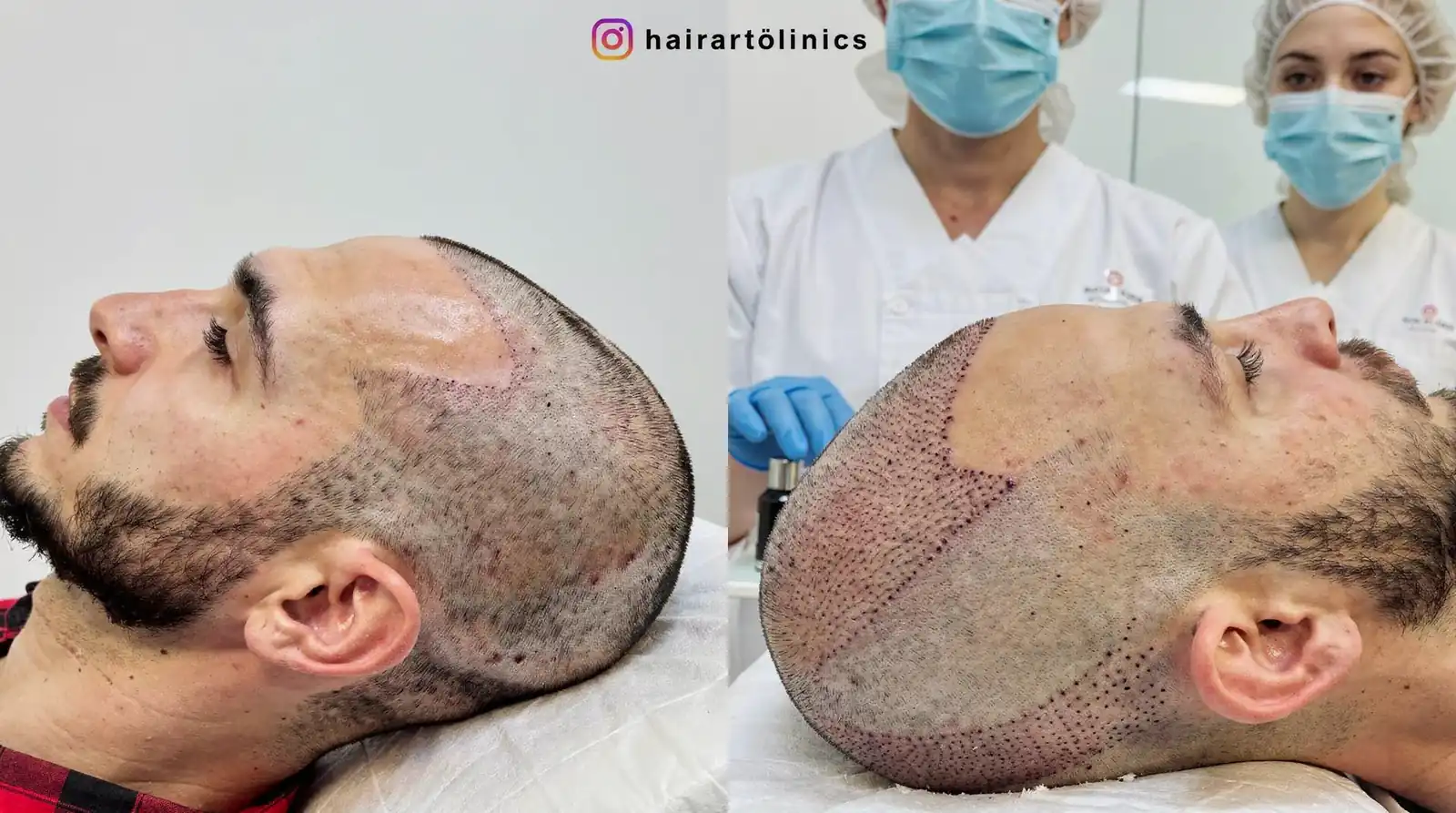
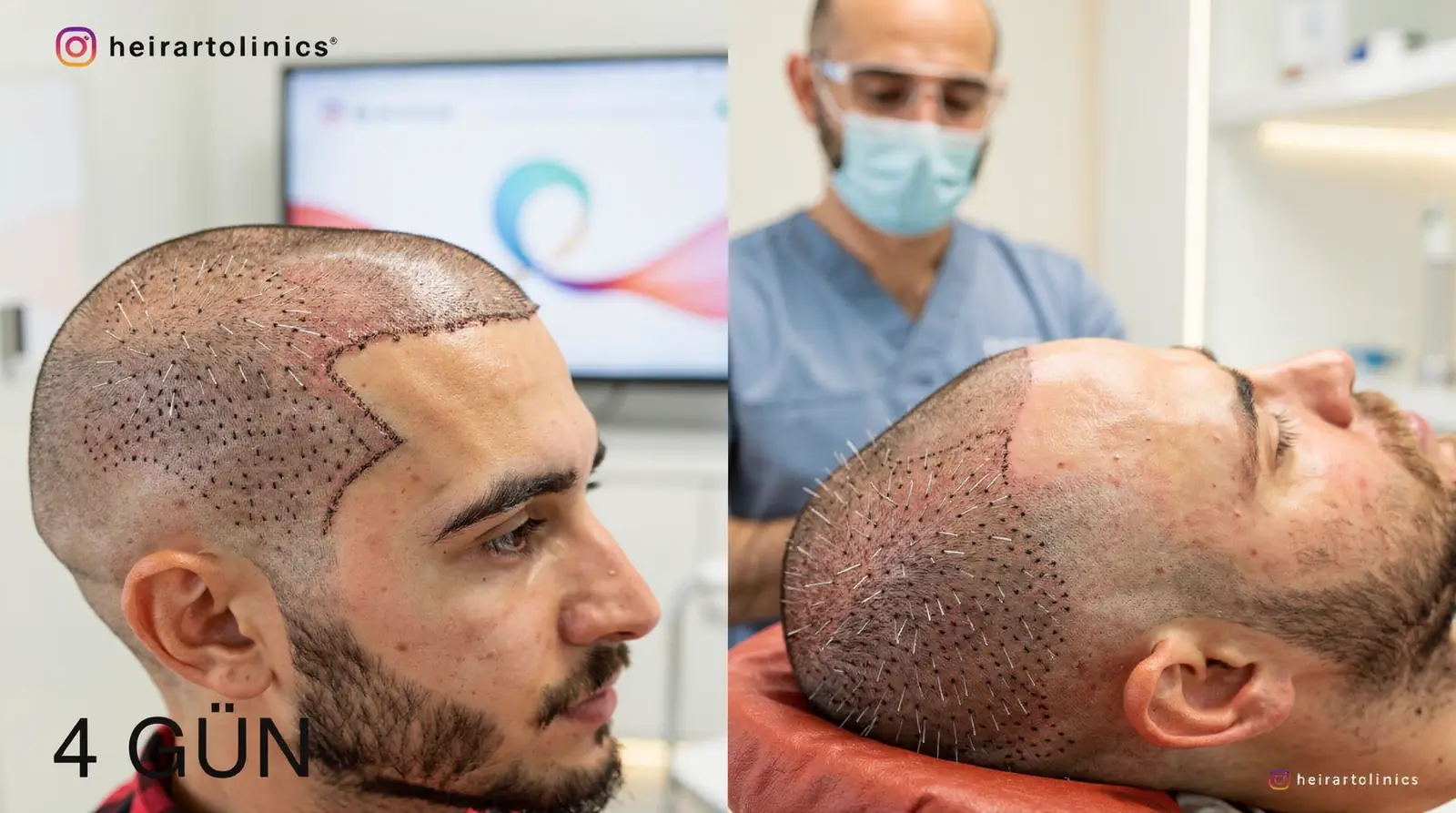
DHI (Direct Hair Implantation) generally produces faster healing than FUE (Follicular Unit Extraction), with recovery spanning roughly 5 to 7 days compared to 7 to 10 days for FUE. Scarring tells a similar story: DHI leaves almost no visible marks, while FUE results in minimal micro-dot scarring across the donor area. Neither outcome disqualifies a candidate from excellent results, but the distinction matters for anyone weighing downtime against budget or graft volume.
Modern hair restoration techniques exist specifically to minimize these trade-offs. Both methods reduce downtime, limit visible scarring, and aim for natural-looking density compared to older strip-harvesting approaches. Choosing between them comes down to individual priorities rather than one method being universally superior.
| Factor | FUE | DHI |
|---|---|---|
| Recovery time | 7–10 days | 5–7 days |
| Scarring | Minimal micro-dots | Almost none |
| Downtime priority | Moderate | Lower |
Does faster healing mean better long-term results?
Not necessarily. Healing speed reflects surgical technique and graft handling, not permanent density or survival rate. A consultation for FUE DHI techniques clarifies which approach aligns with a patient's scalp condition, lifestyle, and desired timeline for returning to normal activities.
Which scarring outcome matters most for short hairstyles?
Patients who prefer closely cropped styles often lean toward DHI, since its near-invisible scarring stays hidden even at short lengths. Those planning larger sessions may still choose FUE, accepting slightly more visible micro-dot marks in exchange for broader coverage options. A personalized evaluation remains the most reliable way to match healing expectations with real-world results.
How Do Density, Comfort, and Cost Compare?
Density, comfort, and cost separate FUE and DHI in ways that matter to anyone planning a hair restoration journey. DHI achieves very high graft density, while FUE produces high density results that satisfy most candidates seeking fuller coverage. Neither technique compromises on natural appearance, but the packing precision differs enough to influence a surgeon's recommendation.
Comfort levels also diverge slightly between the two approaches. FUE involves low pain, managed effectively through local anesthesia during the extraction and implantation phases. DHI patients report minimal discomfort, largely because the specialized implanter pen reduces handling time for each graft. Neither method requires general anesthesia, and both allow patients to remain alert throughout the procedure.
Pricing reflects the added precision DHI demands.
| Factor | FUE | DHI |
|---|---|---|
| Density | High | Very High |
| Pain Level | Low (local anesthesia) | Minimal |
| Cost Range | Pricing details for FUE and DHI are not provided in the source text. |
Which technique delivers denser results?
DHI generally produces denser results because grafts get implanted directly without creating recipient sites beforehand. FUE still achieves high density and remains the preferred choice for larger balding areas requiring broader coverage.
Does DHI cost more than FUE?
Pricing details for FUE and DHI are not provided in the source text.
Booking a consultation for FUE and DHI techniques allows prospective patients to weigh these density, comfort, and budget factors against personal goals. A qualified surgeon can then match the appropriate method to the extent of hair loss, scalp condition, and desired outcome, ensuring the investment produces lasting, natural-looking results.
How Should You Choose With a Consultation?
A consultation for FUE and DHI techniques gives patients a clear, personalized answer before any procedure begins. Surgeons assess scalp condition, donor supply, and hair loss pattern, then match those findings to the technique best suited for lasting density. Skipping this step often leads patients toward a method that fits their budget rather than their biology, a mismatch that shows up years later as uneven coverage or an unnatural hairline.
Technique selection depends heavily on the treatment area. FUE generally suits large zones where maximum graft numbers matter most. DHI works best for precise tasks like sculpting a natural hairline.
| Priority | Better-Suited Technique |
|---|---|
| Large area, high graft count | FUE |
| Precise hairline design | DHI |
| Natural results, faster recovery | DHI |
Which technique fits a receding hairline versus thinning crown?
Patients with a receding hairline typically benefit from DHI, since its precision supports fine, natural-looking hairline design. Those with broader thinning across the crown or mid-scalp often see better outcomes with FUE, which accommodates a higher graft volume across wider surfaces.
Why does an in-person consultation matter?
An in-person evaluation lets the surgical team examine scalp elasticity, donor density, and hair caliber directly rather than relying on photographs. Hair Art Clinics, based in Den Haag, offers patients the opportunity to sit down with specialists and review their options face-to-face.
Conclusion
In closing, both FUE and DHI methodologies represent distinguished approaches to hair restoration, each offering distinct advantages tailored to individual circumstances and aesthetic aspirations. The selection between these refined techniques ultimately depends upon your unique physiological profile, desired outcomes, and personal preferences regarding the restoration journey itself. At Hair Art Clinics, our discerning specialists guide you through this consequential decision with the expertise and attentiveness your transformative experience deserves.