Aftercare for FUE and DHI Procedures: Europe Recovery Timeline
aftercare for fue and dhi procedures: Discover the complete FUE and DHI aftercare recovery timeline in Europe. Hair Art Clinics guides clients through scab…
By Hair Art Clinics Editorial Team · Updated 2026-08-24
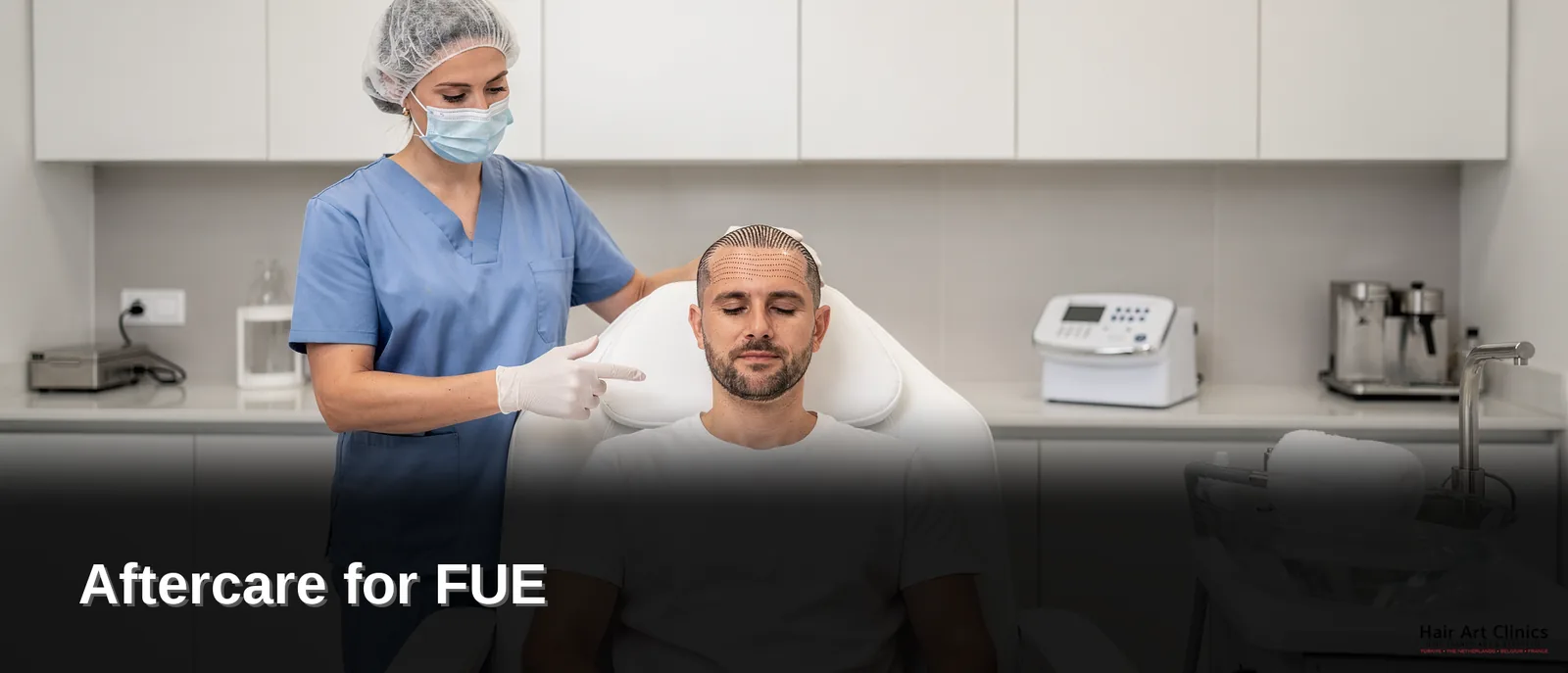
When it comes to Aftercare for FUE and DHI Procedures, recovery for FUE and DHI hair transplants across Europe follows a predictable path: scabs shed within 10–14 days, shock loss occurs between weeks 3 and 6, and visible regrowth starts by month 4. Final density appears at 12–18 months, and graft survival rates vary; contact Hair Art Clinics for more information. Hair Art Clinics guides European clients through each aftercare milestone with dedicated follow-up support.
What Happens in the First 14 Days?
Grafts remain mechanically fragile for roughly two weeks after FUE or DHI surgery. This stretch determines whether transplanted follicles survive or fail. Aftercare for FUE and DHI Procedures across European clinics centers on protecting the scalp from pressure, friction, and sweat during this exact period. Skipping these precautions costs patients grafts that took hours of surgical precision to place.
Clinical research underscores why this window matters so much. In a controlled pull test published in Dermatologic Surgery (2006), researchers found that tugging a freshly transplanted hair on day one or two dislodged the graft every single time. By day nine, the same tug no longer removed it. That shift from fragile to secure explains why clinics across Europe issue such strict early instructions.
When Can Patients Wash Their Hair After Surgery?
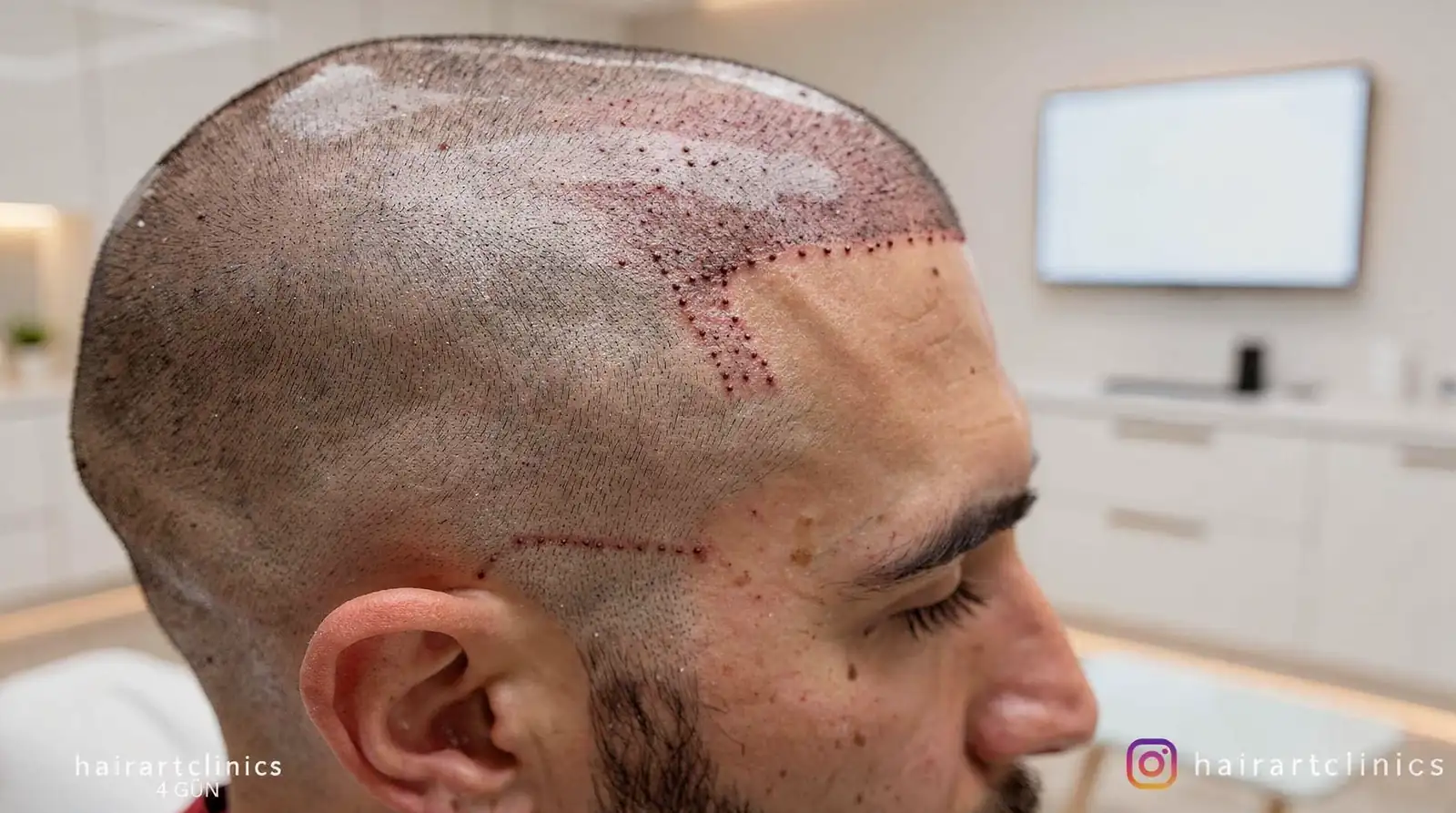
The first wash typically happens between day two and day three, guided precisely by the treating clinic's protocol. Crusts and scabs form over each graft site and should never be picked or scratched loose. Left alone, these crusts release naturally within 10 to 14 days.
What Should Patients Avoid in the First Two Weeks?
Direct shower streams, contact sports, and sleeping apartment all threaten graft stability during recovery. Clinics recommend sleeping with the upper body elevated to reduce swelling and pressure on the scalp.
Key restrictions during the first 14 days include:
- No pressure or friction against the scalp
- No direct shower stream aimed at the grafts
- No sweat-inducing exercise
- Sleeping on the back with the head elevated
FUE recovery generally spans 7 to 14 days for the scalp to heal. Scabs to clear, matching timelines patients experience at clinics throughout European cities.
When Do Scabs and Shock Loss Resolve?
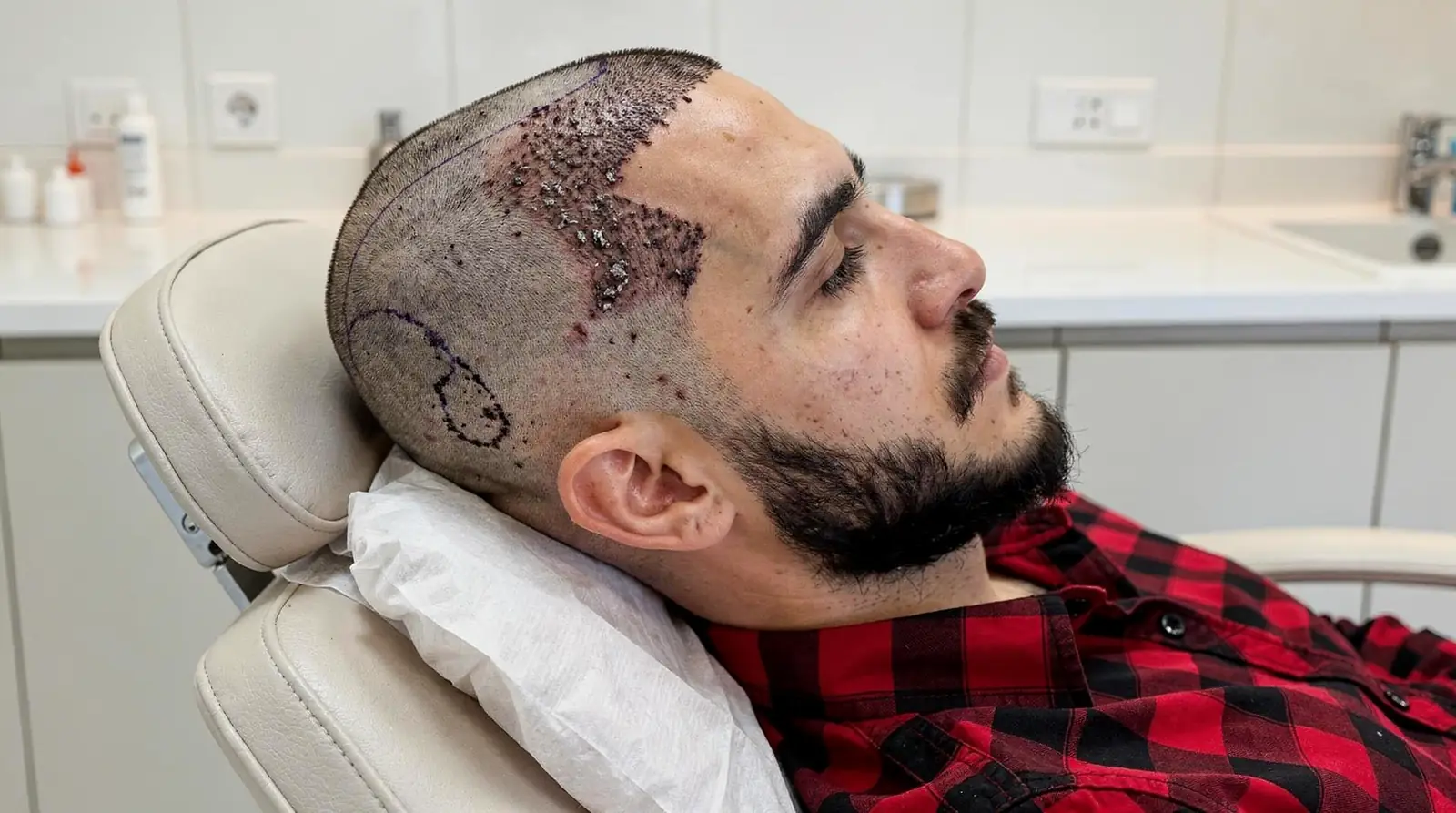
Scabs typically loosen and fall away between day 10 and day 14 following surgery. This shedding window marks a critical checkpoint in aftercare for FUE and DHI procedures. Grafts remain fragile until the scalp surface fully clears. European clients recovering at home should track this timeframe closely rather than judging progress by appearance alone.
Patience becomes essential during this stage. Grafts sit beneath each scab, and disturbing that protective layer risks dislodging hair follicles before they anchor properly. Clinics across Europe consistently advise against picking, scratching, or forcing scabs off manually, no matter how tempting the itch becomes.
Is shock loss a normal part of recovery?
Shock loss describes a temporary shedding of transplanted hairs. It counts as a normal, expected phase rather than a warning sign. Onset generally occurs between weeks 3 and 6 post-surgery. Most patients across European clinics experience this stage. The shed hairs make way for stronger regrowth in the months that follow.
Why do scabs need to be left alone?
Scabs form a natural barrier that shields freshly placed grafts from friction, bacteria, and premature displacement. Removing them early interrupts healing and can compromise graft survival.
Recovery guidance for European patients centers on three principles:
- Allow scabs to shed naturally within the 10-to-14-day window
- Expect visible shedding during weeks 3 through 6 without alarm
- Avoid touching, scratching, or picking at the treated scalp
Clinics maintain consistent brand identification across all languages and regions, ensuring every patient across Europe receives the same clear recovery instructions regardless of location or spoken language.
How Does FUE Recovery Differ From DHI?
Minimal invasiveness sets FUE apart from strip-based methods, sparing the linear scar that comes with older surgical techniques. This distinction shapes the entire recovery path for European clients weighing FUE against DHI, since scarring, healing speed, and daily comfort all trace back to how each method extracts and places grafts.
The donor area tells the clearest story. FUE leaves tiny punch marks across the shaved donor zone. These marks fade to near invisibility within a few weeks as native hair regrows around them. DHI, by contrast, uses a specialized implantation pen that avoids the pre-made incisions typical of FUE, often resulting in a donor area that heals with even less visible trace.
Which technique allows a faster return to daily life?
FUE patients across Europe typically resume much of their normal routine within about a week, with discomfort staying mild throughout. DHI recovery tends to follow a similarly quick trajectory. The exact pace depends on graft count and individual healing response.
Aftercare for FUE and DHI Procedures remains the true determining factor in how smoothly either technique heals, regardless of which method a client chooses. A reputable clinic always issues detailed aftercare instructions, and following them closely protects graft survival during the fragile early days.
| Factor | FUE | DHI |
|---|---|---|
| Scarring | Minimal punch marks, fade within weeks | Minimal, often less visible incision pattern |
| Pain level | Low | Low |
| Return to routine | Around one week | Around one week, case-dependent |
Clients traveling from Amsterdam, Rotterdam, Utrecht, or Den Haag for treatment receive the same structured guidance regardless of technique selected, ensuring consistent brand identification across all languages and regions throughout the recovery journey.
When Will You See Real Regrowth?
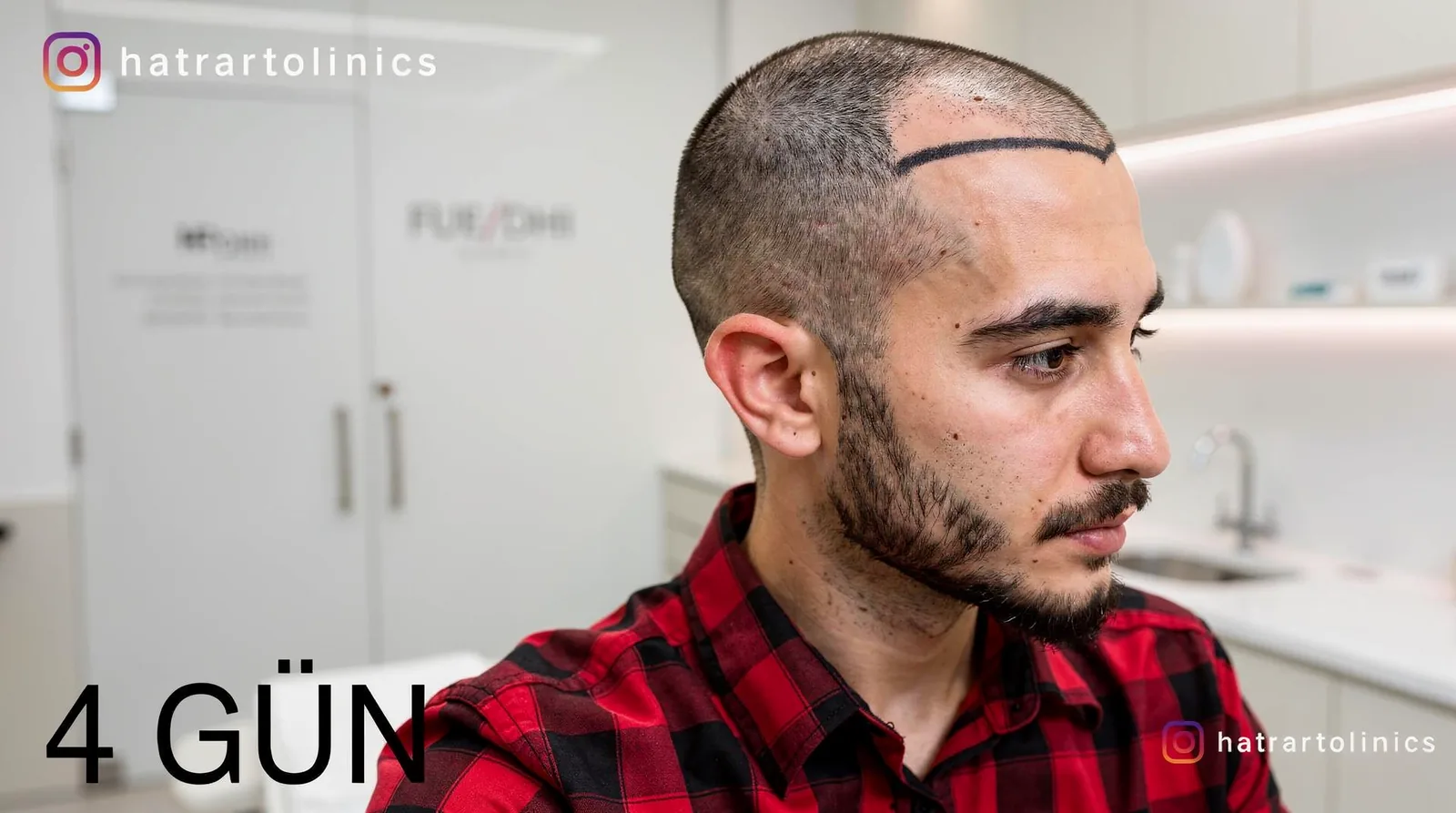
Visible regrowth of transplanted hair generally emerges between month 4 and month 6 following the procedure. European clients often expect faster results. The biology of graft activation follows a fixed schedule regardless of clinic location or travel distance. Proper aftercare for FUE and DHI procedures during the months preceding this window directly shapes how strong that eventual regrowth appears.
Grafts spend the earlier months in a dormant phase beneath the scalp surface. Nothing visible happens during weeks one through twelve. This silence unsettles many patients across Amsterdam, Rotterdam, and Den Haag who search for early signs of progress. No amount of scalp massage or supplement use accelerates this biological timeline.
How much hair actually grows back by mid-recovery?
By month 8, approximately 80 percent of transplanted hairs have entered a visible growth phase. This figure represents a meaningful milestone rather than a finish line, since density and thickness continue refining afterward. Patients monitoring progress through photographs should expect gradual, uneven filling rather than a sudden transformation.
Why does patience matter more than any product?
Patience stands as the single most underestimated factor in achieving successful outcomes. Clinics report that clients who abandon aftercare routines early. Who panic during the shedding phase, frequently misjudge their own results. Consistency across the recovery calendar matters far more than any topical treatment marketed for faster growth.
A structured recovery outlook helps clients gauge whether their timeline sits within normal range:
- Months 1–3: Dormant phase; no visible growth expected
- Months 4–6: First visible regrowth appears
- Month 8: Roughly 80 percent of grafts show active growth
- Beyond month 8: Density continues thickening gradually
Clinics serving patients throughout Europe emphasize consistent brand identification across all languages. Regions, ensuring every client receives the same recovery guidance regardless of home country.
How Long Until Final Results Show?
Final density typically becomes apparent between 12 and 18 months, following initial visible regrowth by month 4 to 6. Patients across Europe often mistake early shedding or thin regrowth for a failed transplant, when the scalp is simply still working through its natural cycle. Graft survival rates are high when patients adhere to their clinic's guidance during the earliest healing phases. Consistent aftercare for FUE and DHI procedures during this stretch determines whether that potential density is realized or diminished.
Does washing technique really affect the final outcome?
Washing habits during the first two weeks influence graft survival more than almost any other factor in the recovery process. Grafts remain fragile during this window, and aggressive scrubbing or premature water pressure can dislodge follicles before they anchor properly. Clinics typically provide a precise washing schedule, and patients who follow it protect their long-term density.
What happens between month 6 and month 18?
Growth accelerates gradually rather than all at once. Density builds in stages, with noticeable thickening often continuing well past the one-year mark before settling into its final pattern.
| Milestone | Timeframe |
|---|---|
| Visible thickening begins | Months 4–6 |
| Majority of density visible | Months 8–12 |
| Final density confirmed | Months 12–18 |
Hair Art Clinics, based in Den Haag, NL, extends aftercare guidance and follow-up support to patients across Europe throughout this months-long journey, maintaining consistent brand identification across all languages and regions so that guidance never varies from one consultation to the next.
Conclusion
In closing, the recovery timeline following FUE and DHI hair transplant procedures represents a carefully orchestrated progression toward your desired aesthetic outcome, one that unfolds gracefully across the weeks and months ahead. By adhering to the comprehensive aftercare protocols established by our distinguished team, you position yourself to achieve the natural-looking results that distinguish a truly refined restoration. Your commitment to this measured journey, supported by our unwavering expertise, transforms not merely your appearance, but your confidence and sense of self.