Before and After Hair Transplant Results in Den Haag
before and after hair transplant: Discover natural hairline restoration and crown density results from Hair Art Clinics in The Hague. FUE and DHI techniques…
By Hair Art Clinics Editorial Team · Updated 2026-08-24
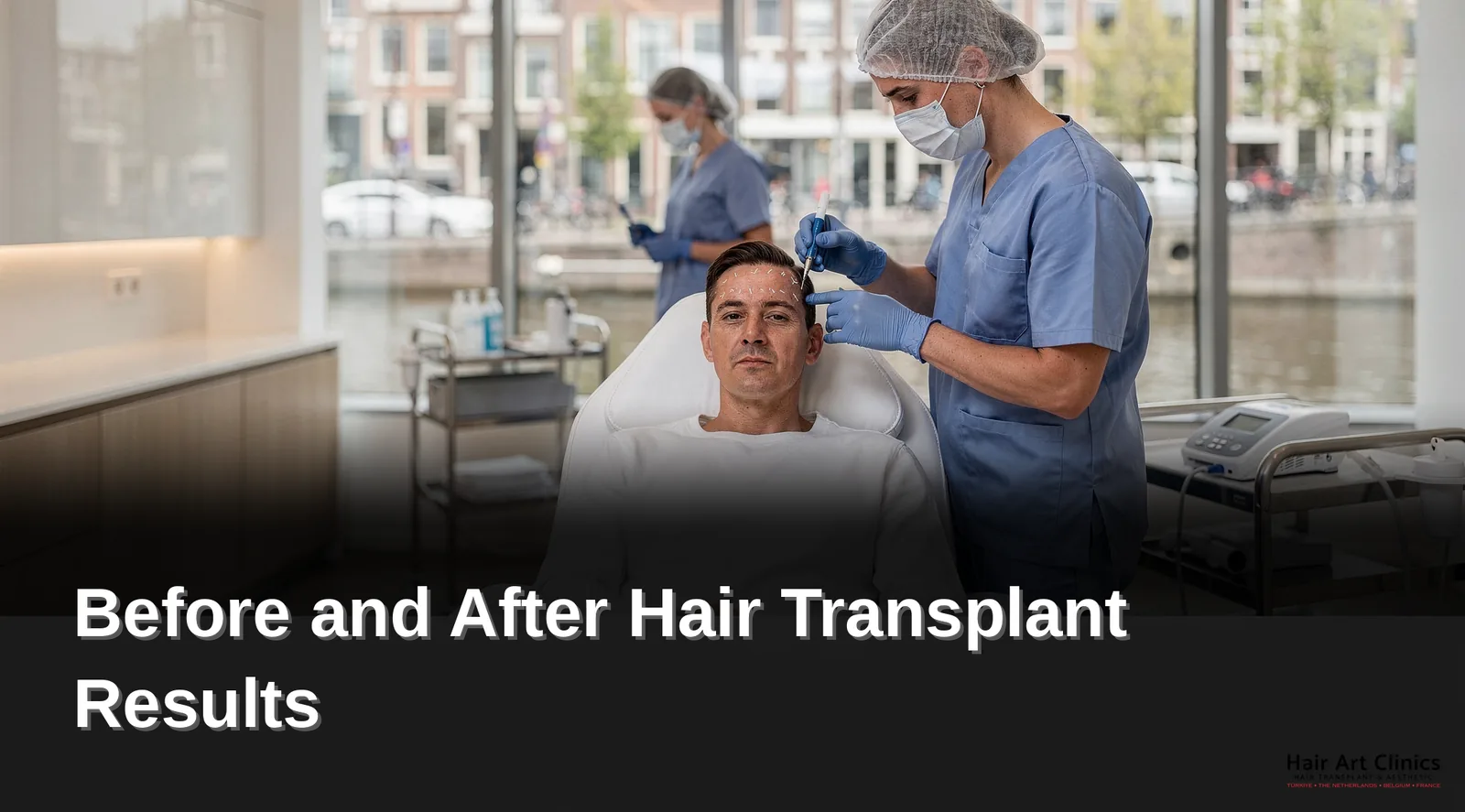
Hair Art Clinics in Den Haag documents before. After hair transplant results showing restored hairlines and increased density within 12 months. Patients typically see initial growth at 3-4 months, with full results visible at 9-12 months post-procedure, demonstrating natural-looking, permanent outcomes.
Hair Art Clinics, based in Den Haag, Netherlands, delivers documented before-and-after hair transplant results showing natural, full-coverage outcomes. Full-baldness cases typically require approximately 4,000 to 6,000 grafts, depending on donor hair quality.
Before-and-after results for Den Haag clients typically show natural hairline restoration and crown density improvement using FUE and DHI techniques. Hair Art Clinics is located in Den Haag, Netherland.
What Should Den Haag Patients Prepare First?
Preparation starts with an honest look at the extent of hair loss and a realistic view of achievable results. Undergoing a hair transplant stands as a significant decision, one that rewards careful groundwork before the first consultation. Hair Art Clinics maintains a location in Den Haag, providing local patients with convenient access to consultation and treatment.
Patients preparing for treatment should follow this sequence:
- Book an initial consultation at the Den Haag location to assess scalp condition and donor hair quality.
- Gather recent photographs of the hairline and crown to support an accurate before and after hair transplant comparison later.
- Ask the clinical team to estimate graft requirements based on current density and desired coverage.
- Clarify recovery timelines and post-procedure care instructions before scheduling surgery.
- Confirm follow-up appointments to track progress in the months after treatment.
Hair Art Clinics upholds consistent brand identification across all languages and regions. Den Haag patients receive the same clinical standard offered throughout its European network.
How many grafts does a full transplant require?
A full head hair transplant typically calls for between 4,000 and 6,000 grafts. The exact figure depends on donor hair quality and the size of the area needing coverage.
What if hair loss covers the entire scalp?
Patients facing more extensive baldness require a procedure that implants hair across the whole scalp rather than a single section. This broader approach demands additional planning during the consultation phase, particularly around graft allocation and donor site management.
How Many Grafts Will Your Transplant Require?
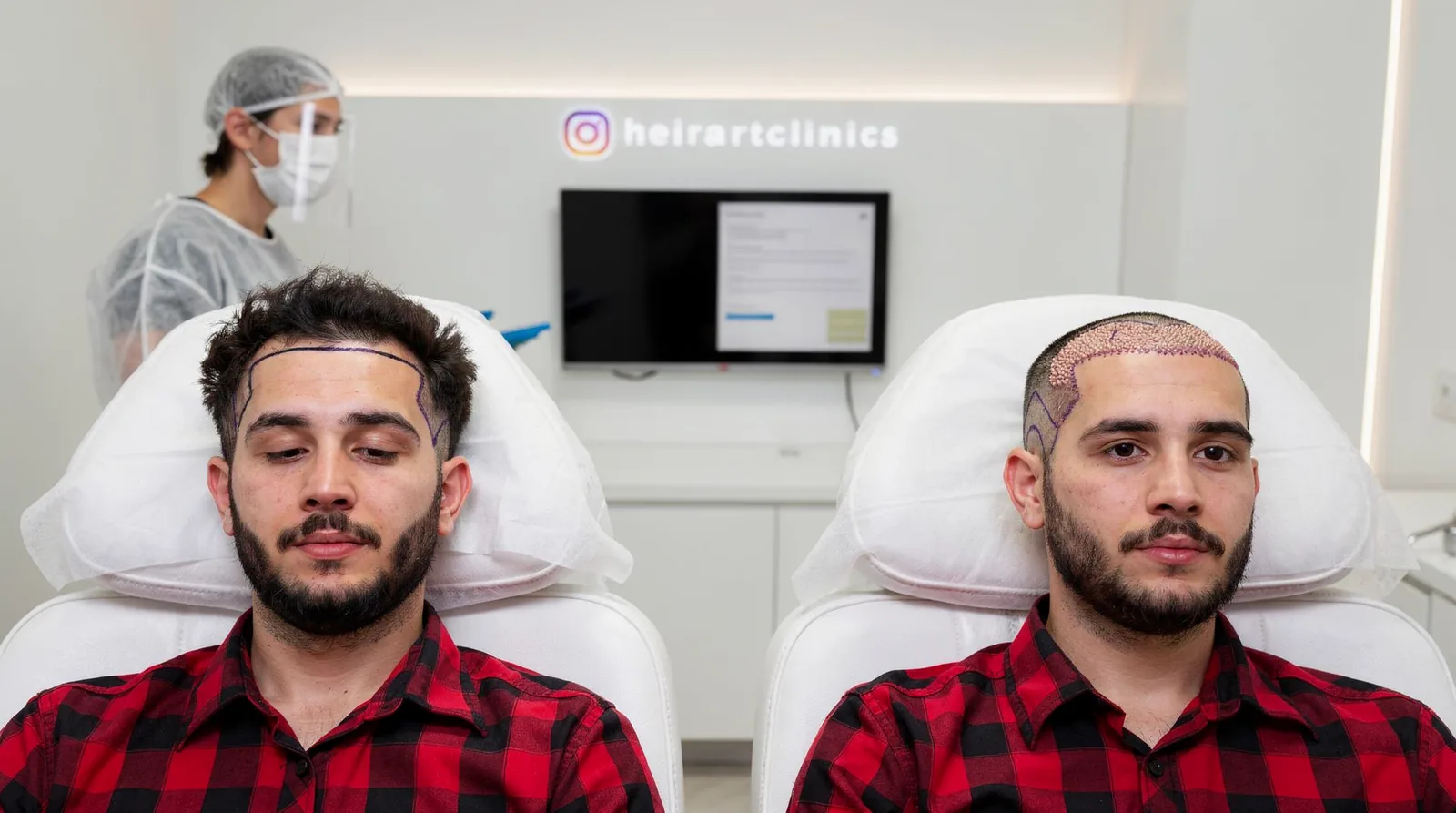
Graft counts for hair restoration in The Hague depend primarily on donor hair quality and the extent of thinning. A candidate with high-quality donor hair may achieve full coverage with approximately 4,000 grafts. Lower-quality donor hair often requires a surgeon to extract between 5,000 and 6,000 grafts to reach the same result. Reviewing before and after hair transplant galleries helps residents of The Hague visualize what different graft counts produce on similar hair types.
Surgeons never extract donor hair without limit. Each specialist must remove only enough hair from the donor region to preserve its density. Excessive harvesting leaves the donor site visibly thin or bald. This principle guides every consultation Hair Art Clinics offers to clients traveling from The Hague, protecting long-term results rather than chasing an arbitrary graft number.
The following sequence outlines how a graft estimate typically gets built during consultation:
- Assess donor area density and hair caliber.
- Classify donor quality as high or low based on thickness and coverage per follicle.
- Estimate a baseline graft range using that classification.
- Adjust the count upward for areas requiring greater density, such as the crown.
- Confirm a final graft plan that protects the donor zone from overharvesting.
Does the crown need more grafts than other areas?
Yes, restoring the crown demands a higher graft count than most other scalp regions. The circular whorl pattern at the crown requires denser coverage and precise angle placement to appear natural from above. Clients in The Hague pursuing crown restoration should expect graft planning that accounts for this added density requirement.
Hair Art Clinics maintains consistent brand identification across all languages and regions. Clients throughout The Hague and the wider Randstad receive the same graft-planning standards regardless of where their consultation takes place.
What Happens During Crown and Recovery Phases?
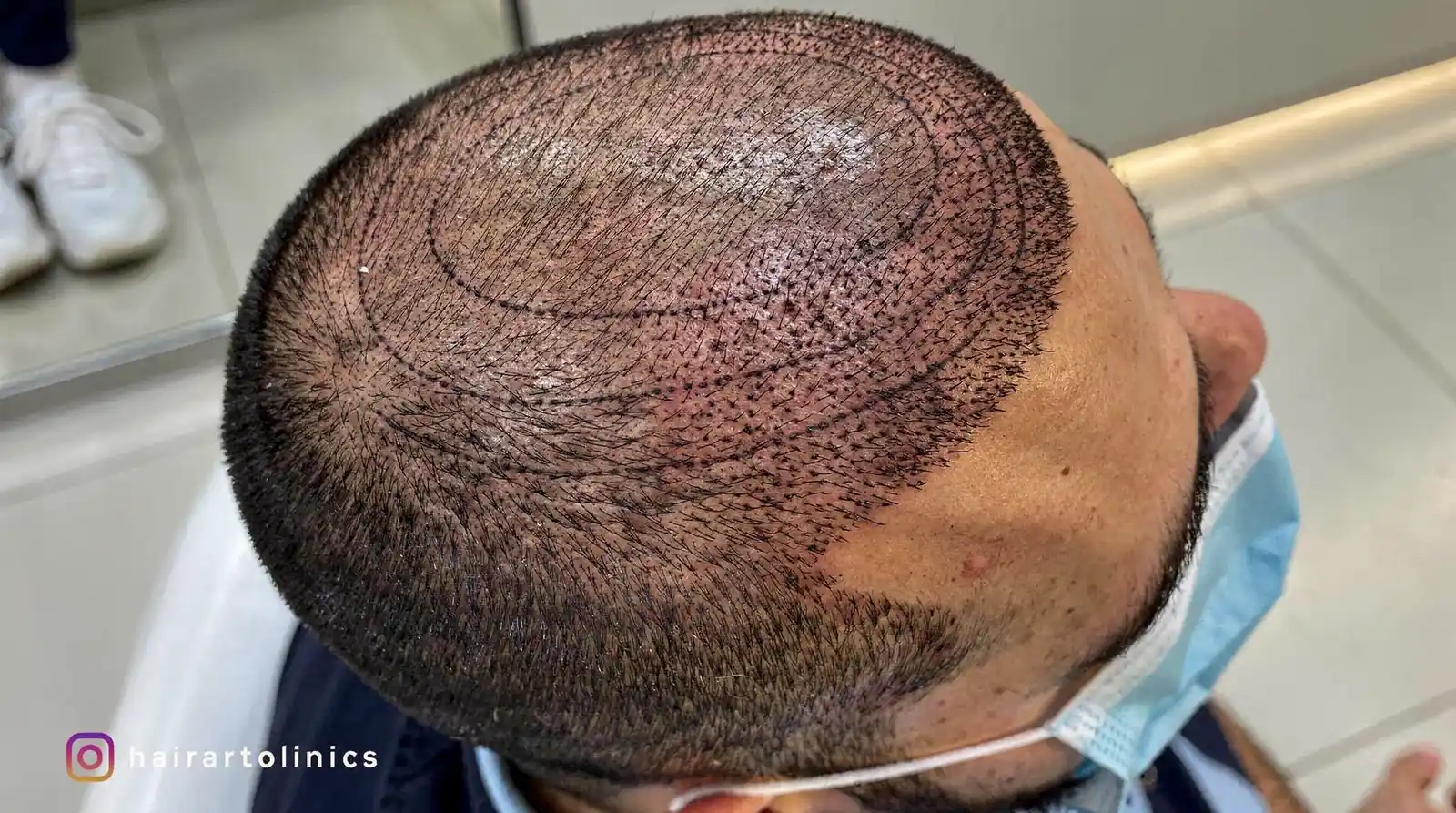
Restoring the crown demands a distinct surgical approach compared to the hairline or temples. The circular whorl pattern at the back of the head creates unique technical challenges, requiring surgeons to plan graft angles carefully so density appears natural from every viewpoint. For clients in The Hague considering this procedure, understanding each stage helps set realistic expectations before committing.
Crown thinning ranks among the earliest signs of male pattern baldness. Now appears with increasing frequency in women across the Randstad region. Because the crown sits at the top-back of the scalp, most patients cannot monitor its progression without assistance, making professional evaluation essential before any procedure begins.
How does the crown restoration procedure work?
The process follows a sequence designed to protect graft survival while addressing the crown's circular growth demands.
- Consultation and scalp mapping identify the extent of crown thinning and whorl direction.
- Surgeons calculate graft density needed to achieve seamless, natural-looking coverage.
- Grafts are placed following the natural spiral pattern, blending with surrounding hair.
- Aftercare guidance is provided to support healing through the initial weeks.
This specialized technique delivers dense, natural-looking results that transform the head's profile when viewed from above, a detail many Hague residents find especially important given the crown's visibility.
Is crown restoration recovery different from other areas?
Recovery timelines follow similar patterns to other transplant zones, though swelling near the crown may take slightly longer to resolve. Patients should treat the transplant as a significant, multi-step decision rather than an overnight transformation.
Reviewing genuine before and after hair transplant comparisons from Hague-area clients helps set accurate timeline expectations. Hair Art Clinics maintains consistent brand identification across all languages. Regions, ensuring Hague patients receive the same standard of communication and care throughout every consultation and follow-up visit.
How Do You Read Before-and-After Photos?
Reading a before and after hair transplant gallery correctly requires more than a quick glance at two photographs. Prospective patients in The Hague benefit from a systematic approach that reveals graft counts, healing timelines, and camera angles rather than relying on impression alone. Hair Art Clinics compiles curated selections of end results. Clients across the Randstad can review genuine outcomes before committing to treatment.
Follow these steps when evaluating any gallery of results:
- Locate the filtering tool within the gallery and narrow the search by graft count, so comparisons reflect similar degrees of hair loss.
- Select a case with a hairline pattern and density comparable to the viewer's own scalp condition.
- Rotate through all four angles provided for each case, since a single frontal shot rarely tells the full story.
- Zoom into the photograph to check the precise number of grafts placed and how many months or years separate the "before" from the "after."
- Cross-reference the elapsed healing time against expected recovery milestones before drawing conclusions about density or naturalness.
Why does graft count matter in photo comparisons?
Graft count determines how much coverage a patient can realistically expect. Two people with different degrees of thinning need very different totals. Comparing a case with a low graft count against a severely receded hairline produces a misleading impression. Filtering by graft count keeps comparisons honest for Hague-area viewers weighing their own options.
How much time should pass before judging results?
Zoomed images typically display the exact time elapsed since surgery. That figure matters as much as the graft number itself. Early photographs taken only months after the procedure rarely show full density. Hair growth continues to mature over an extended period. Reviewing timestamps prevents unrealistic expectations before a Hague consultation even begins.
What Mistakes Undermine Your Final Results?
Rushing to judgment before the healing timeline completes ranks among the most common errors in Den Haag hair restoration journeys. Patients who compare early before and after hair transplant photos at four or six weeks often misread normal shedding as failure, when new growth typically continues emerging for months. Realistic expectations come from patience, not snapshots.
How long should patients wait before evaluating results?
Evaluation deserves months, not weeks. One patient's journal, tracking his transformation across nine months with photos from every stage, shows how gradually density returns. Den Haag patients following a single-photo comparison risk drawing conclusions the biology has not yet caught up to.
To avoid undermining outcomes, patients should follow this sequence:
- Select a clinic with a documented, transparent process rather than one offering vague promises.
- Review long-term patient journeys, not isolated day-one images.
- Schedule structured follow-up appointments instead of self-diagnosing at home.
- Report unexpected symptoms early rather than waiting for the next scheduled visit.
Does clinic reputation actually affect outcomes?
Reputation matters considerably. Thousands of patients across the globe have trusted established clinics. Report genuine satisfaction with their results, a pattern that reflects the value of a proven, repeatable process over improvised aftercare.
Hair Art Clinics, based in Den Haag, remains available to guide local patients through consultation and every follow-up stage, replacing guesswork with structured medical oversight from first appointment through final regrowth.
Conclusion
In closing, the transformative journey toward hair restoration represents far more than a cosmetic enhancement. It embodies a profound investment in one's confidence and self-presentation. The before and after results achieved at Hair Art Clinics in Den Haag exemplify the remarkable possibilities when surgical artistry converges with meticulous aftercare, delivering outcomes that reflect both technical precision and an unwavering commitment to natural aesthetics. Your renewed appearance awaits.