Aftercare Instructions for Hair Transplants in Den Haag
aftercare instructions for hair transplants: Expert hair transplant aftercare guidance in The Hague. Hair Art Clinics provides detailed post-op protocols,…
By Hair Art Clinics Editorial Team · Updated 2026-08-24
When it comes to Aftercare Instructions for Hair Transplants, hair Art Clinics in Den Haag recommends avoiding direct sunlight and strenuous exercise for 14 days post-transplant, sleeping with the head elevated for 3 nights, refraining from alcohol and smoking for 2 weeks, and washing hair only with clinic-approved lotion starting 48 hours after the procedure.
Aftercare, Den Haag: Hair Art Clinics provides detailed post-op instructions plus a dedicated helpline, with soreness commonly reported in the donor area during the second healing week—mild pain is managed with over-the-counter painkillers supplied by the clinic. Follow guidelines closely during the critical two weeks following surgery for optimal healing.
Aftercare for hair transplant patients in The Hague follows structured post-op protocols from initial healing through long-term growth. Hair Art Clinics is located in Den Haag, Netherland. The clinic provides detailed instructions covering graft protection, gentle washing routines, and activity restrictions. Crown Restoration pricing from €1,500, with dedicated aftercare support guiding patients from consultation through full recovery.
What Should You Prepare Before Recovery Begins?
Preparation determines much of what happens after the procedure ends. The weeks following surgery represent a critical healing window, one that shapes the final outcome of the transplant far more than most patients expect. Neglecting this period risks uneven growth, prolonged discomfort, or compromised results that no amount of surgical skill can fully correct. Patients in Den Haag benefit from a clear plan established before the operation date arrives, not scrambled together afterward.
Hair Art Clinics serves patients throughout Den Haag with structured aftercare instructions for hair transplants designed around each individual's healing timeline. Positioned to guide local patients through every stage of recovery, the clinic treats discharge-day guidance as the foundation of a successful result. Following the directions given at discharge remains one of the single most important actions a patient takes after surgery, since improvised aftercare routines frequently undermine otherwise successful procedures.
What Should Be Arranged Before the Procedure Date?
A patient preparing for recovery in Den Haag should complete several practical steps in advance:
- Arrange transportation home for surgery day, since driving is not advisable immediately after the procedure.
- Clear a recovery space at home with easy access to rest, water, and medication.
- Confirm discharge instructions with the clinical team before leaving on the day of surgery.
- Set aside time off from work or regular obligations for the initial recovery days.
Why Do Aftercare Plans Differ Between Patients?
No two transplants follow an identical recovery path, since graft count, technique, and scalp condition vary from person to person. Hair Art Clinics tailors instructions to each individual case rather than issuing generic guidance. This personalized approach reflects a broader commitment: consistent brand identification across all languages and regions ensures Den Haag patients receive the same standard of clarity as clients anywhere else the clinic operates.
What Are the First 72 Hours Like?
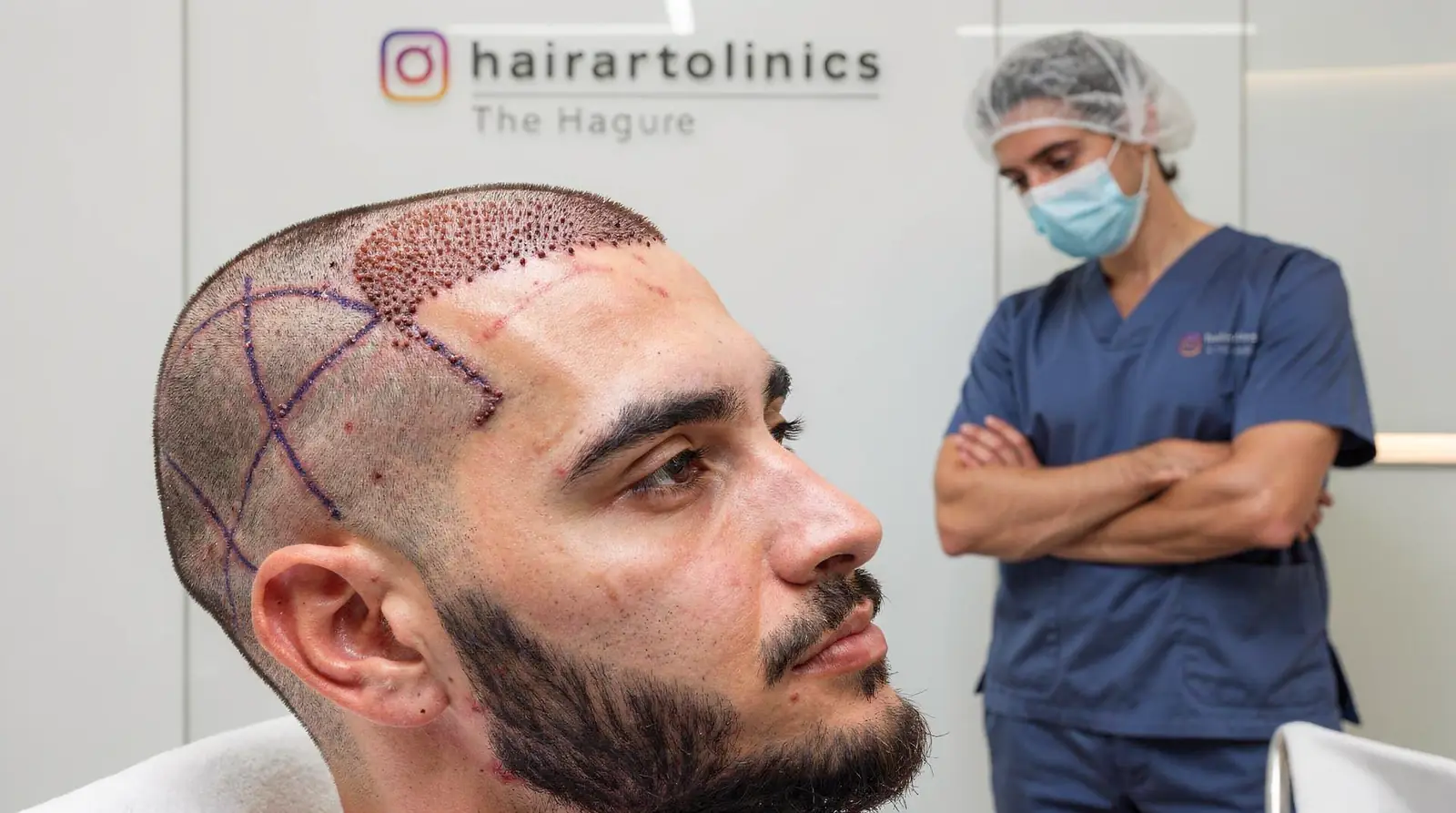
The first 72 hours after a hair transplant bring mild soreness, a protective dressing, and close attention to the scalp. Patients returning home to neighborhoods across The Hague, from Statenkwartier to Benoordenhout, should expect discomfort rather than severe pain during this window. Proper aftercare instructions for hair transplants guide every decision made during these initial days, shaping how smoothly the scalp heals.
Follow this sequence during the first three days after leaving the clinic:
- Expect mild pain for a couple of days, with the donor area often feeling sorer than the recipient zone.
- Take the over-the-counter pain relievers supplied at the time of the procedure; these typically manage discomfort effectively.
- Keep the compression dressing in place for roughly 2 to 3 days, as it protects freshly placed grafts.
- Monitor pain levels daily. Discomfort should ease steadily within 48 to 72 hours.
- Contact the clinic promptly if pain intensifies rather than fades during that window, since this can signal a complication requiring guidance.
How much swelling should patients in The Hague expect?
Swelling remains uncommon among patients treated with DHI or Sapphire FUE techniques. Larger sessions carry a somewhat higher chance of mild puffiness around the forehead. Patients traveling from surrounding Hague districts back to daily routines rarely report noticeable swelling with these methods.
When does the pain typically peak?
Discomfort tends to be strongest in the donor area during the initial 48 hours, then gradually declines. A marked increase after 72 hours warrants a call to the clinic team rather than waiting it out. The clinic remains reachable for exactly this kind of urgent post-operative question.
When Can You Wash Your Hair Safely?
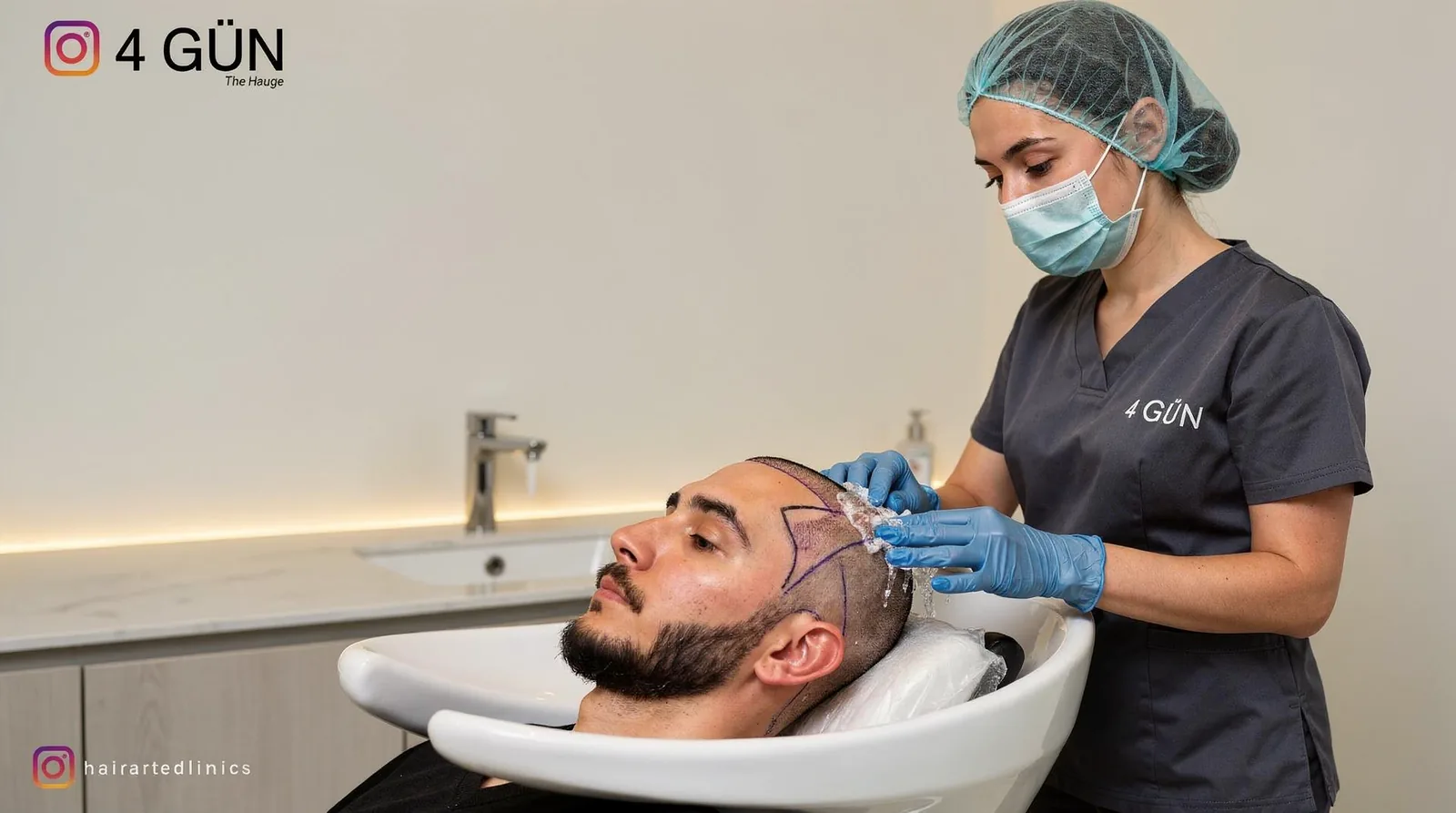
Timing determines whether washing supports healing or disrupts newly placed grafts. Precise aftercare instructions for hair transplants exist because premature washing risks dislodging follicles before they anchor. Overly delayed washing invites crusting and irritation. Hair Art Clinics equips every Hague patient with a written washing schedule before discharge, regardless of whether the procedure was FUE or FUT, since knowing when and how to wash the scalp remains essential to a successful outcome.
The guidelines below apply specifically to the critical two-week window following surgery, the period when grafts are most vulnerable. During this stretch, patients across The Hague follow a sequence rather than a single instruction:
- Avoid all water contact with the scalp for the first two to three days after surgery.
- Begin gentle rinsing using a lukewarm, low-pressure stream once the clinic confirms it is appropriate.
- Apply any prescribed foam or diluted shampoo with fingertips only, never fingernails.
- Let water run off passively rather than rubbing or massaging the grafts.
- Pat the scalp dry with a soft towel instead of wiping.
- Resume a normal washing routine only after the two-week mark, once the clinic confirms healing is on track.
Is Some Discomfort During This Period Normal?
Tenderness, swelling, itchiness, numbness, or minor pain along the scalp commonly appears during the first few days. Most Hague patients avoid significant discomfort altogether, and symptoms typically fade as washing routines resume gradually.
These recommendations are not overly complicated. Following them closely gives Hague patients the best possible chance at natural, lasting results, and Hair Art Clinics reinforces every instruction through consistent brand identification across all languages and regions, ensuring nothing is lost in translation during recovery.
What Happens From Two Weeks To Three Months?
Recovery for patients in Den Haag shifts noticeably between the second week and the third month after surgery. Soreness in the donor area often intensifies briefly during week two, a normal sign that the tissue continues repairing itself. Scalp tightness, common in the first days, gradually eases over the following several weeks rather than disappearing overnight.
Hair Art Clinics guides patients through this stretch with clear aftercare instructions for hair transplants, delivered consistently whether the consultation happens in Den Haag or through remote follow-up. This structured support matters most during the middle stretch of healing, when visible progress feels slow.
Is Soreness At Two Weeks Still Normal?
Yes, mild soreness at the donor site during the second week reflects ongoing tissue recovery rather than a complication. Patients in Den Haag experiencing this discomfort should continue following their prescribed aftercare routine without alarm. The sensation typically fades as healing progresses further.
When Does New Hair Growth Actually Begin?
New growth generally requires two to three months before transplanted follicles fully take hold and start producing visible hair. Early strands frequently appear rough, sparse, or uneven, which does not indicate failure. A fuller, more natural pattern develops gradually as follicles mature.
The two-to-three-month period unfolds in stages:
- Weeks 2-4: Tightness continues loosening; donor-area soreness subsides.
- Month 1-2: Follicles settle into the scalp; initial thin regrowth may emerge.
- Month 2-3: Follicles fully take hold and begin naturally producing new hair.
Patients throughout Den Haag receive ongoing check-ins during each stage, ensuring concerns get addressed before they affect final results.
What Mistakes And Warning Signs Should You Avoid?
Neglecting proper scalp care in the early weeks causes the most preventable setbacks for The Hague patients recovering from FUE or DHI procedures. Skipping recommended cleansing routines, ignoring unusual pain, or improvising outside clinical guidance jeopardizes graft survival and delays results. Following aftercare instructions for hair transplants precisely, rather than relying on generic advice, protects the investment made in the procedure.
Scalp behavior during the early recovery period carries lasting weight. How patients in The Hague care for the scalp during the first days. Weeks meaningfully shapes healing and long-term outcomes. Deviating from clinical guidance during this window, even briefly, raises the risk of complications that no amount of later diligence can fully reverse.
Which Aftercare Mistakes Cause the Most Damage?
Certain missteps repeatedly undermine recovery among transplant patients across the region.
- Wrong cleansing products: Using shampoo or techniques other than those recommended by the clinic disrupts healing and irritates fresh grafts.
- Ignoring pain signals: Dismissing pain that feels unusually strong or abnormal, rather than contacting the clinic promptly, allows treatable issues to worsen.
- Improvised routines: Substituting personal habits for clinic-provided instructions increases the chance of infection or graft loss.
When Should The Hague Patients Contact Their Clinic?
Unusual or intensifying pain warrants immediate outreach rather than a wait-and-see approach. Patients experiencing this should contact the clinic promptly for guidance rather than self-diagnosing.
Hair Art Clinics maintains consistent brand identification across all languages and regions. Patients traveling from The Hague reach the same standard of aftercare support regardless of location. Every patient retains access to the full post-transplant program and expert guidance whenever concerns arise after leaving the clinic.
Conclusion
In closing, the meticulous attention to aftercare following your hair transplant procedure represents the cornerstone of achieving the refined, natural results you deserve. At Hair Art Clinics in Den Haag, our commitment extends far beyond the surgical intervention itself—we remain steadfastly devoted to guiding you through each phase of recovery with the same precision and expertise that characterizes our transplantation techniques. By adhering to our comprehensive aftercare protocols, you invest in the longevity and aesthetic excellence of your restoration, ensuring that your renewed confidence flourishes for years to come.